Chicken Pad See Ew (Thai Street Food)
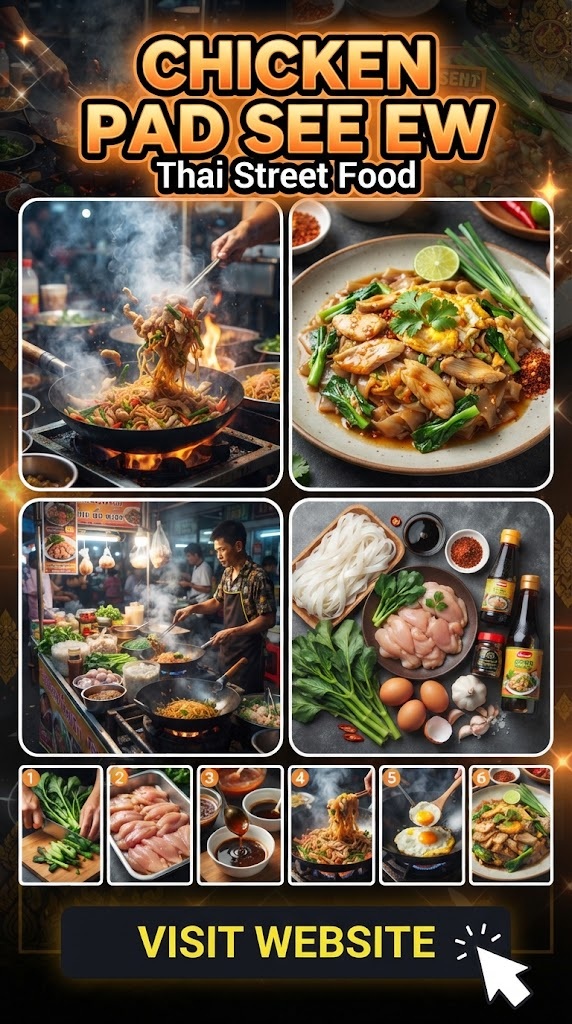
Chicken Pad See Ew is one of Thailand’s most comforting noodle dishes: chewy wide rice noodles stir-fried with tender chicken, crisp Chinese broccoli, scrambled egg, and a rich, savory-sweet sauce. It is the kind of meal that comes together quickly in a very hot wok, making it perfect for a weeknight dinner when you want something that tastes like your favorite Thai street-food stall.
The secret is high heat, a flavorful sauce, and giving the noodles enough contact with the hot pan to develop those delicious slightly charred edges. Unlike Pad Thai, Pad See Ew is not primarily tangy or peanut-forward. Its signature flavor is deep, salty, caramelized, smoky, and just slightly sweet.
This homemade version uses ingredients that are widely available and includes detailed instructions so you can make restaurant-style Chicken Pad See Ew in your own kitchen.
What Is Pad See Ew?
Pad See Ew, sometimes written as Pad See Eew or Phat Si Io, is a popular Thai stir-fried noodle dish. The name roughly translates to “stir-fried soy sauce.”
It traditionally features:
- Wide rice noodles
- Dark soy sauce
- Light soy sauce
- Chinese broccoli
- Egg
- Chicken, pork, beef, tofu, or another protein
- Garlic
- A little sugar
- High-heat stir-frying
The noodles are soft and chewy, while the vegetables provide a little crunch. The chicken adds protein and makes the dish substantial enough to serve as a complete dinner.
One of the most important characteristics of good Pad See Ew is the balance between savory soy sauce and caramelized sweetness. The noodles should not be swimming in sauce. Instead, the sauce should lightly coat every noodle while the high heat creates small browned, smoky spots.
Chicken Pad See Ew Recipe
Prep Time
20 minutes
Cook Time
15 minutes
Total Time
35 minutes
Servings
4
Cuisine
Thai
Course
Main Course
Difficulty
Easy to Intermediate
Ingredients
For the Chicken
- 1 pound boneless, skinless chicken thighs or chicken breast
- 1 tablespoon light soy sauce
- 1 teaspoon oyster sauce
- 1 teaspoon cornstarch
- 1 teaspoon neutral cooking oil
- 1/4 teaspoon white pepper
- 1 small garlic clove, finely minced
Chicken thighs are especially good because they remain juicy during high-heat cooking. Chicken breast can also be used, but be careful not to overcook it.
For the Noodles
- 1 pound fresh wide rice noodles
- 1 tablespoon neutral cooking oil, if needed
Fresh wide rice noodles are ideal because they have the chewy texture associated with restaurant-style Pad See Ew.
If fresh noodles are unavailable, you can use dried wide rice noodles. Cook them according to the package directions, but stop cooking them slightly before they become completely tender.
For the Vegetables
- 2 cups Chinese broccoli, cut into bite-size pieces
- 2 garlic cloves, minced
- 1 tablespoon neutral cooking oil
Chinese broccoli, also called gai lan, has leafy greens and crunchy stems that work beautifully with the soft noodles.
If you cannot find Chinese broccoli, regular broccoli, broccolini, or another sturdy green vegetable can be substituted.
For the Pad See Ew Sauce
- 2 tablespoons light soy sauce
- 1 tablespoon dark soy sauce
- 1 tablespoon oyster sauce
- 1 tablespoon fish sauce
- 1 tablespoon granulated sugar
- 1 teaspoon rice vinegar
- 1/2 teaspoon toasted sesame oil, optional
- 1 tablespoon water
The combination of light and dark soy sauce is important.
Light soy sauce provides saltiness and savory flavor.
Dark soy sauce provides color, deeper flavor, and a slightly sweet character.
Oyster sauce contributes richness and umami, while fish sauce adds another layer of savory depth.
For the Eggs
- 2 large eggs
- 1 teaspoon cooking oil
Optional Garnishes
Pad See Ew is delicious without many toppings, but you can serve it with:
- Crushed roasted peanuts
- Red pepper flakes
- Thai chili flakes
- Fresh lime wedges
- Sliced fresh chilies
- Extra fish sauce
- A small amount of rice vinegar
These additions allow everyone to adjust the final flavor to their preference.
Ingredient Substitutions
You don’t need to have every traditional ingredient to make a delicious version of this dish.
Chicken
Use:
- Chicken thighs
- Chicken breast
- Ground chicken
- Thinly sliced pork
- Thinly sliced beef
- Shrimp
- Tofu
If using shrimp, cook them separately and add them back near the end.
Chinese Broccoli
If Chinese broccoli isn’t available, use:
- Broccolini
- Regular broccoli
- Bok choy
- Baby bok choy
- Kale
Choose vegetables that can withstand high heat without becoming mushy.
Fresh Rice Noodles
Fresh wide rice noodles are best, but dried rice noodles can work.
Look for noodles labeled:
- Wide rice noodles
- Sen Yai
- Thai rice noodles
How to Prepare the Chicken
Start by slicing the chicken into thin, bite-size pieces.
Cutting the chicken thinly is important because Pad See Ew cooks quickly. Large chunks of chicken may remain undercooked while the noodles become overcooked.
Place the sliced chicken in a bowl.
Add:
- Light soy sauce
- Oyster sauce
- Cornstarch
- White pepper
- Garlic
- Cooking oil
Mix thoroughly.
Let the chicken marinate for approximately 10 to 15 minutes while you prepare the other ingredients.
The cornstarch creates a thin coating around the chicken. This helps protect the meat from the intense heat of the wok while also giving it a tender texture.
How to Prepare Fresh Rice Noodles
Fresh rice noodles can be delicate, so handle them carefully.
If the noodles are stuck together, gently separate them with your fingers.
Do not aggressively pull them apart because they can tear.
If the noodles are very cold or firm, allow them to sit at room temperature for approximately 15 to 20 minutes.
For particularly thick fresh noodles, you can briefly warm them according to the package instructions.
The goal is to have noodles that are flexible but not falling apart.
How to Prepare Dried Noodles
If using dried noodles, bring a large pot of water to a boil.
Add the noodles and cook according to the package directions.
However, remove them about 1 minute earlier than the recommended cooking time.
They should be flexible but still slightly firm.
Drain thoroughly.
Do not leave cooked noodles sitting in a large amount of water because they can become soft and sticky.
Toss them with a tiny amount of oil if necessary to prevent sticking.
Make the Pad See Ew Sauce
Before turning on the stove, combine the sauce ingredients in a small bowl.
Mix together:
- 2 tablespoons light soy sauce
- 1 tablespoon dark soy sauce
- 1 tablespoon oyster sauce
- 1 tablespoon fish sauce
- 1 tablespoon sugar
- 1 teaspoon rice vinegar
- 1/2 teaspoon sesame oil
- 1 tablespoon water
Stir until the sugar begins to dissolve.
This preparation is extremely important.
Pad See Ew cooks quickly. Once the noodles are in the wok, you won’t have much time to measure individual ingredients.
Having the sauce ready allows you to focus on tossing the noodles and controlling the heat.
How to Cook Chicken Pad See Ew Step by Step
Step 1: Heat the Wok
Place a large wok or heavy skillet over high heat.
Let it become very hot before adding the oil.
A properly heated wok should feel intensely hot when you hold your hand several inches above it.
Do not put your hand directly over the pan.
High heat is one of the defining characteristics of Pad See Ew. The goal is to cook quickly while creating caramelization.
Step 2: Cook the Chicken
Add approximately 1 tablespoon of cooking oil.
Add the marinated chicken in a single layer.
Allow it to cook without moving for approximately 30 to 60 seconds.
This creates browning.
Then stir-fry the chicken until it is almost completely cooked, approximately 2 to 4 minutes depending on the thickness of the pieces.
Remove the chicken from the wok and set it aside.
Don’t worry if the chicken isn’t completely finished at this stage. It will return to the wok later.
Step 3: Cook the Chinese Broccoli
Add another small amount of oil if the wok looks dry.
Add the Chinese broccoli stems first.
Stir-fry for about 30 seconds.
Then add the leaves and garlic.
Continue cooking for another 1 to 2 minutes.
The vegetables should remain bright and slightly crisp.
You don’t want completely soft vegetables.
Remove them from the wok if your pan is small and set them aside with the chicken.
Step 4: Cook the Eggs
Add a small amount of oil.
Crack the eggs directly into the hot wok.
Let them sit for several seconds before gently scrambling.
You want soft pieces of egg rather than tiny dry crumbs.
Cook until mostly set.
Do not overcook the eggs.
Step 5: Add the Noodles
Now add the wide rice noodles.
This is where technique becomes especially important.
Spread the noodles across the hot surface of the wok.
Let them sit undisturbed for approximately 20 to 30 seconds.
Then gently toss or stir them.
Allowing the noodles to sit briefly against the hot wok helps create those slightly browned edges that make restaurant-style Pad See Ew so delicious.
Step 6: Add the Sauce
Pour the prepared sauce around the noodles.
The sauce should immediately sizzle.
Toss the noodles gently to coat them.
Don’t stir aggressively because fresh rice noodles can break.
Use a spatula to lift and fold the noodles rather than constantly chopping through them.
Cook for approximately 1 to 2 minutes.
The noodles should absorb the sauce and become glossy.
Step 7: Return the Chicken and Vegetables
Add the cooked chicken and Chinese broccoli back into the wok.
Toss everything together.
Continue cooking for another 1 to 2 minutes.
The chicken should be completely cooked through.
For food safety, chicken should reach an internal temperature of 165°F (74°C).
Step 8: Create the Final Char
Increase the heat slightly if necessary.
Spread the noodles across the wok.
Allow them to sit undisturbed for approximately 20 to 30 seconds.
Toss.
Repeat once or twice.
This creates the subtle smoky flavor commonly associated with Thai street-food noodles.
Be careful not to burn the sauce.
The difference between delicious caramelization and burnt noodles can happen quickly.
Step 9: Taste and Adjust
Turn off the heat.
Taste one noodle.
Ask yourself:
- Does it need more salt?
- Is it sweet enough?
- Does it need more acidity?
- Is the flavor too strong?
If necessary, adjust with tiny amounts of:
- Soy sauce for saltiness
- Sugar for sweetness
- Rice vinegar for acidity
- Fish sauce for savory depth
Make adjustments gradually.
It is much easier to add seasoning than to correct an overly salty dish.
Step 10: Serve Immediately
Chicken Pad See Ew is best served immediately while the noodles are hot, glossy, and chewy.
Divide between four plates or shallow bowls.
Serve with optional:
- Chili flakes
- Lime wedges
- Sliced chilies
- Crushed peanuts
Enjoy while hot.
Why High Heat Matters
One of the biggest differences between homemade Pad See Ew and restaurant-style Pad See Ew is heat management.
A wok needs enough heat to:
- Quickly cook the chicken.
- Evaporate excess moisture.
- Caramelize the sauce.
- Brown the noodles.
- Prevent the dish from becoming watery.
If your pan isn’t hot enough, the ingredients release moisture and essentially steam.
The result can be:
- Wet noodles
- Mushy vegetables
- Pale chicken
- Weak flavor
A very hot pan gives you the opposite:
- Charred edges
- Glossy noodles
- Tender chicken
- Crisp vegetables
- Deep savory flavor
The Best Noodles for Pad See Ew
The traditional choice is a fresh, wide rice noodle.
These noodles are thick, soft, and chewy.
Their broad surface area allows the sauce to cling to them.
If you can find fresh Thai rice noodles, use them.
If not, dried wide rice noodles are a practical substitute.
Avoid very thin rice vermicelli because they don’t have the same texture.
How to Prevent Noodles From Breaking
Fresh rice noodles are fragile.
Here are several ways to protect them.
Don’t Overcook Them
Overcooked noodles become soft and break easily.
Don’t Stir Constantly
Let them sit against the wok before tossing.
Use a Wide Spatula
A broad spatula allows you to lift noodles instead of cutting through them.
Don’t Overcrowd the Pan
Too many ingredients lower the temperature.
If you’re doubling the recipe, cook it in two batches.
Don’t Add Excess Sauce
Too much liquid can soften the noodles.
Common Mistakes
1. Using Low Heat
This is probably the most common mistake.
Low heat prevents caramelization.
Solution
Preheat your wok thoroughly and cook quickly.
2. Adding Too Much Sauce
Pad See Ew should be glossy, not soupy.
Solution
Measure the sauce carefully.
You can always add more at the end.
3. Overcooking the Noodles
Soft noodles can quickly become mushy.
Solution
Cook dried noodles slightly under the package recommendation.
Fresh noodles generally need very little preparation.
4. Overcrowding the Wok
A crowded wok behaves more like a steamer.
Solution
Use a large wok or cook in batches.
5. Cutting the Chicken Too Thick
Thick chicken pieces take longer to cook.
Solution
Slice chicken thinly and evenly.
6. Burning the Sauce
Dark soy sauce and sugar can burn quickly.
Solution
Keep the heat high but stay attentive.
Once the sauce is added, keep the noodles moving.
7. Making the Vegetables Too Soft
Chinese broccoli should retain some bite.
Solution
Cook the stems first and add the leaves later.
Tips for Restaurant-Style Chicken Pad See Ew
Use Chicken Thighs
Chicken thighs stay juicy and flavorful.
Slice Everything Before Cooking
Once the wok is hot, the cooking process moves very quickly.
Prepare the Sauce in Advance
This prevents delays.
Use a Large Wok
More surface area means better browning.
Don’t Constantly Stir
Contact with the hot wok creates flavor.
Cook in Batches if Necessary
This is especially important for a four-serving recipe if your wok is small.
Use Fresh Noodles When Possible
Their chewy texture is difficult to replicate.
Don’t Skip Dark Soy Sauce
It contributes both color and depth.
Can You Make Pad See Ew Without a Wok?
Absolutely.
A large cast-iron skillet or heavy stainless-steel frying pan can work very well.
The key is to choose the largest pan you have.
Avoid a small nonstick pan if possible because you won’t get the same high-heat searing effect.
If using nonstick cookware, follow the manufacturer’s recommended heat limits rather than heating it excessively.
How to Make Spicy Chicken Pad See Ew
Traditional Pad See Ew isn’t necessarily extremely spicy.
However, you can easily add heat.
Try:
- Thai chili flakes
- Crushed red pepper
- Fresh sliced Thai chilies
- Chili oil
- Sliced jalapeño
For a balanced spicy version, add a small amount of chili during cooking and serve extra chili flakes at the table.
This lets everyone control the heat.
How to Make Vegetarian Pad See Ew
Replace the chicken with:
- Extra Chinese broccoli
- Tofu
- Mushrooms
- Broccoli
- Bell peppers
Use vegetarian oyster sauce or mushroom stir-fry sauce instead of traditional oyster sauce.
Replace fish sauce with additional light soy sauce or a vegetarian seasoning sauce.
How to Make Beef Pad See Ew
Thinly sliced beef works wonderfully in this recipe.
Good choices include:
- Sirloin
- Ribeye
- Flank steak
Slice the beef very thinly against the grain.
Marinate it using the same basic chicken marinade.
Cook quickly over high heat and remove it from the pan before cooking the noodles.
Return it near the end.
How to Make Shrimp Pad See Ew
For shrimp Pad See Ew, use peeled and deveined medium or large shrimp.
Pat the shrimp dry before cooking.
Cook them over high heat for approximately 1 to 2 minutes per side, depending on their size.
Remove them from the pan before cooking the noodles.
Return them at the end.
This prevents overcooked, rubbery shrimp.
What to Serve With Chicken Pad See Ew
Pad See Ew is a complete meal by itself.
However, you can serve it alongside:
Thai Cucumber Salad
The fresh, crisp flavor contrasts beautifully with the rich noodles.
Spring Rolls
Crispy spring rolls provide a different texture.
Thai Iced Tea
The creamy sweetness pairs nicely with salty, savory noodles.
Fresh Fruit
Pineapple, mango, or watermelon makes a refreshing finish.
Simple Green Salad
A lightly dressed salad can balance the richness of the meal.
Storage Instructions
Allow leftover Pad See Ew to cool slightly before transferring it to an airtight container.
Refrigerate for up to 3 to 4 days.
Do not leave cooked chicken noodles sitting at room temperature for extended periods.
How to Reheat Pad See Ew
The best method is a skillet or wok.
Heat a small amount of oil over medium-high heat.
Add the noodles.
Add 1 to 2 tablespoons of water.
Toss until heated through.
The water creates steam and helps loosen the noodles.
You can also microwave the noodles.
Place them in a microwave-safe bowl and sprinkle a little water over them.
Cover loosely and heat in short intervals, stirring between intervals.
Can You Freeze Pad See Ew?
You can freeze it, but the noodle texture may change.
Fresh rice noodles tend to become softer after freezing and thawing.
For best quality, enjoy the dish fresh or refrigerate leftovers for several days.
If you do freeze it, place cooled noodles in an airtight freezer-safe container.
Thaw overnight in the refrigerator and reheat in a hot skillet.
Meal Prep Tips
Chicken Pad See Ew can be prepared efficiently for meal prep.
Prepare the following ahead of time:
- Slice the chicken
- Wash and cut the Chinese broccoli
- Mix the sauce
- Prepare the noodles
Keep each component refrigerated separately.
When you’re ready to eat, heat the wok and cook everything quickly.
For the best texture, don’t fully assemble the noodles days in advance.
Nutrition Information
Approximate nutrition per serving will vary according to the specific ingredients and portion sizes.
A typical serving provides approximately:
- Calories: 550–650
- Protein: 30–40 g
- Carbohydrates: 65–75 g
- Fat: 15–22 g
- Fiber: 3–5 g
- Sodium: Highly variable depending on the soy sauce and fish sauce used
For a lighter version, reduce the amount of oil and sugar and increase the amount of Chinese broccoli.
Frequently Asked Questions
Is Pad See Ew spicy?
Traditional Pad See Ew is generally mild. The primary flavors are savory, sweet, salty, and slightly smoky.
You can add chili flakes or fresh chilies if you prefer heat.
Is Pad See Ew gluten-free?
Traditional soy sauce usually contains wheat, so it may not be gluten-free.
For a gluten-free version, use certified gluten-free soy sauce or tamari and make sure your oyster sauce and other ingredients are also gluten-free.
What does Pad See Ew taste like?
It has a rich, savory, slightly sweet flavor with caramelized soy sauce and a subtle smoky quality from high-heat cooking.
What is the difference between Pad See Ew and Pad Thai?
Pad Thai is usually more tangy and sweet, with tamarind-based flavors and often peanuts.
Pad See Ew is darker, more savory, and centered around soy sauce and wide rice noodles.
Can I use regular broccoli?
Yes.
Broccolini and regular broccoli are excellent substitutes for Chinese broccoli.
Can I use chicken breast?
Yes.
Slice it thinly and avoid overcooking it.
Why are my noodles sticky?
They may have been overcooked, overcrowded, or left sitting together for too long.
Fresh noodles should be handled gently.
Complete Quick Recipe Card
Chicken Pad See Ew
Servings: 4
Prep: 20 minutes
Cook: 15 minutes
Total: 35 minutes
Ingredients
Chicken:
- 1 lb boneless chicken
- 1 tbsp light soy sauce
- 1 tsp oyster sauce
- 1 tsp cornstarch
- 1 tsp oil
- 1/4 tsp white pepper
- 1 minced garlic clove
Noodles:
- 1 lb fresh wide rice noodles
Vegetables:
- 2 cups Chinese broccoli
- 2 minced garlic cloves
- 1 tbsp oil
Sauce:
- 2 tbsp light soy sauce
- 1 tbsp dark soy sauce
- 1 tbsp oyster sauce
- 1 tbsp fish sauce
- 1 tbsp sugar
- 1 tsp rice vinegar
- 1/2 tsp sesame oil
- 1 tbsp water
Eggs:
- 2 large eggs
- 1 tsp oil
Instructions
- Slice chicken thinly.
- Marinate chicken with soy sauce, oyster sauce, cornstarch, oil, white pepper, and garlic.
- Mix all sauce ingredients in a small bowl.
- Prepare fresh noodles by gently separating them.
- Heat a wok over high heat.
- Add oil and stir-fry chicken until almost cooked through.
- Remove chicken.
- Stir-fry Chinese broccoli stems, then leaves and garlic.
- Remove vegetables if necessary.
- Add oil and scramble eggs.
- Add rice noodles.
- Let noodles sit briefly against the hot wok.
- Add prepared sauce.
- Toss gently until noodles are glossy and lightly caramelized.
- Return chicken and vegetables.
- Stir-fry for another 1–2 minutes.
- Make sure chicken reaches 165°F/74°C internally.
- Taste and adjust seasoning.
- Serve immediately with optional chili flakes and lime.
Final Tips for Perfect Chicken Pad See Ew
For the best homemade Chicken Pad See Ew, remember these five rules:
1. Prepare everything first.
Once cooking starts, everything moves quickly.
2. Use wide rice noodles.
Their chewy texture is essential to the dish.
3. Keep the wok hot.
High heat creates the characteristic caramelized flavor.
4. Don’t drown the noodles in sauce.
Pad See Ew should be glossy rather than watery.
5. Give the noodles time to brown.
Briefly leaving them against the hot pan creates the delicious smoky, slightly charred flavor that makes this Thai street-food classic so irresistible.