
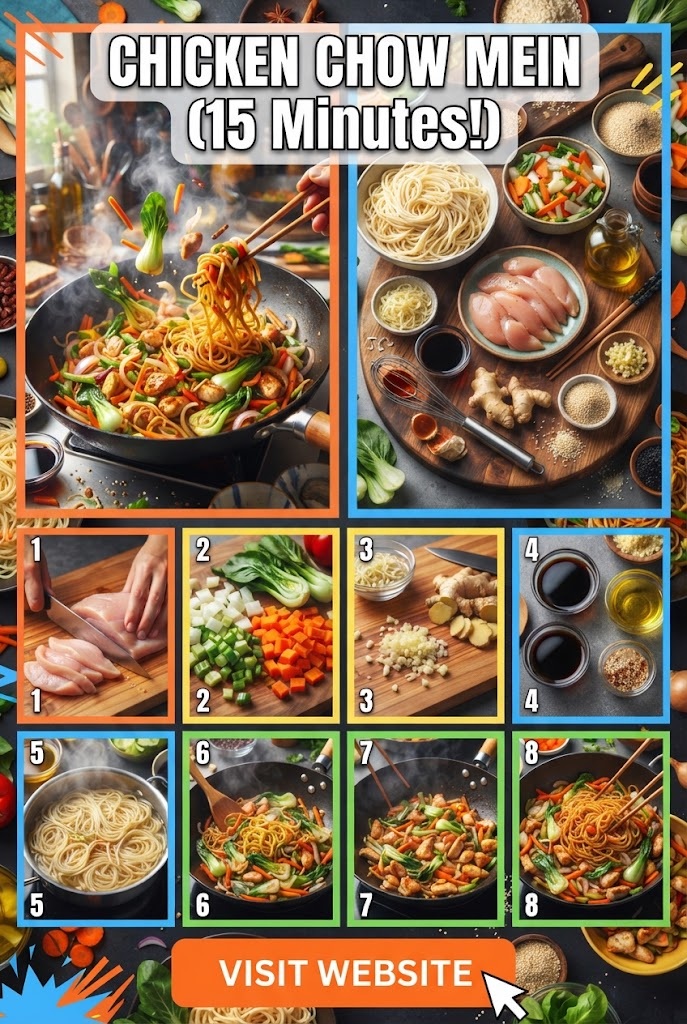
Chicken Chow Mein (15 Minutes!)
Chicken Chow Mein is one of those fast, satisfying dinners that tastes like takeout but can be made in your own kitchen in about 15 minutes. Tender chicken, chewy noodles, crisp vegetables, and a savory homemade chow mein sauce come together in one hot skillet or wok. It is quick enough for a busy weeknight, yet flavorful enough to become a regular family favorite.
The secret to great Chicken Chow Mein is simple: prepare everything before you start cooking. Once the wok gets hot, the recipe moves very quickly. The chicken cooks first, followed by the vegetables and noodles, and then everything is tossed together with a glossy, savory sauce.
This recipe is also incredibly flexible. You can use chicken breast or chicken thighs, swap in your favorite vegetables, make the sauce sweeter or spicier, or add extra noodles for a heartier meal. Best of all, you do not need complicated ingredients or special restaurant equipment.
Why You’ll Love This Chicken Chow Mein
There are plenty of reasons to make this recipe at home.
1. It Really Is Fast
With your ingredients prepared ahead of time, the actual cooking takes only about 10–15 minutes. That makes it ideal for busy evenings when you want something homemade without spending an hour in the kitchen.
2. Better Than Takeout
Homemade chow mein gives you control over the ingredients and flavors. You can add more chicken, load it with vegetables, adjust the saltiness, and make the sauce exactly how you like it.
3. One-Pan Convenience
Everything comes together in one wok or large skillet, which means fewer dishes to wash afterward.
4. Family Friendly
The basic sauce is savory, slightly sweet, and rich without being overwhelmingly spicy. Children can enjoy it as-is, while adults can add chili oil or red pepper flakes.
5. Easy to Customize
Use cabbage, carrots, bell peppers, onions, bean sprouts, broccoli, mushrooms, or whatever vegetables you already have.
Complete Chicken Chow Mein Recipe
Recipe Overview
Prep Time: 5 minutes
Cook Time: 10 minutes
Total Time: 15 minutes
Servings: 4
Cuisine: Chinese-inspired
Course: Main Course
Difficulty: Easy
Ingredients
For the Chicken
- 1 pound boneless, skinless chicken breast
- 1 tablespoon soy sauce
- 1 teaspoon cornstarch
- 1 teaspoon sesame oil
- ½ teaspoon garlic powder
- ¼ teaspoon black pepper
- 1 tablespoon neutral cooking oil
Chicken thighs can also be used if you prefer darker meat. They are especially juicy and forgiving if slightly overcooked.
For the Chow Mein
- 12 ounces chow mein noodles
- 2 tablespoons vegetable oil
- 2 cups shredded green cabbage
- 1 medium carrot, julienned or thinly sliced
- 1 small bell pepper, thinly sliced
- ½ medium yellow onion, thinly sliced
- 2 green onions, sliced
- 2 cloves garlic, finely minced
- 1 teaspoon freshly grated ginger
- 1 cup bean sprouts, optional
You can add other vegetables if desired. Broccoli, snow peas, mushrooms, celery, and bok choy all work beautifully.
Homemade Chow Mein Sauce
The sauce is what brings the entire dish together.
Combine:
- ¼ cup low-sodium soy sauce
- 2 tablespoons oyster sauce
- 1 tablespoon hoisin sauce
- 1 tablespoon sesame oil
- 1 tablespoon brown sugar
- 1 tablespoon rice vinegar
- 1 teaspoon cornstarch
- ¼ teaspoon white pepper
- 1–2 tablespoons water
Whisk everything together until the cornstarch is completely dissolved.
Optional Spicy Additions
For spicy Chicken Chow Mein, add one of the following:
- 1 teaspoon chili oil
- ½ teaspoon red pepper flakes
- 1 teaspoon chili garlic sauce
- 1 teaspoon sriracha
Start with a small amount and increase according to your taste.
What Kind of Noodles Should You Use?
Traditional chow mein can be made with fresh or dried wheat-based noodles.
Fresh chow mein noodles are ideal because they have a pleasant chewy texture and cook quickly.
However, you can substitute:
- Dried chow mein noodles
- Chinese egg noodles
- Lo mein noodles
- Yakisoba noodles
- Thin spaghetti
- Linguine
If using spaghetti, cook it just until al dente. Avoid overcooking because the noodles will continue cooking in the wok.
How to Prepare the Ingredients
The most important preparation step is cutting everything before you turn on the stove.
Chow mein cooks extremely quickly. If you are chopping vegetables while the chicken is already cooking, you may accidentally overcook the chicken or vegetables.
Slice the chicken into thin strips approximately ¼-inch thick.
Thin pieces cook quickly and remain tender.
Slice the cabbage into thin shreds. Cut the carrot into matchsticks or very thin strips. Slice the bell pepper and onion thinly as well.
Mince the garlic and grate the ginger.
Prepare the sauce in a small bowl and place it near the stove.
Cook and drain the noodles before beginning the stir-fry.
Once everything is prepared, you are ready to cook.
How to Make Chicken Chow Mein
Step 1: Marinate the Chicken
Place the sliced chicken in a bowl.
Add:
- Soy sauce
- Cornstarch
- Sesame oil
- Garlic powder
- Black pepper
Toss until every piece is evenly coated.
You do not need a long marinade. Even 3–5 minutes while you prepare the other ingredients is enough.
Why Use Cornstarch?
Cornstarch creates a thin coating around the chicken. It helps protect the meat from the intense heat of the wok and gives the chicken a tender, slightly silky texture.
This simple technique is one of the reasons restaurant-style stir-fried chicken is so tender.
Step 2: Cook the Noodles
Bring a large pot of water to a boil.
Cook the noodles according to the package instructions.
Do not overcook them.
You want them slightly firm because they will cook again briefly in the wok.
Drain the noodles thoroughly.
If the noodles are sticky, toss them with a tiny amount of sesame or vegetable oil.
Set them aside.
Step 3: Mix the Sauce
In a small bowl, whisk together:
- Soy sauce
- Oyster sauce
- Hoisin sauce
- Sesame oil
- Brown sugar
- Rice vinegar
- Cornstarch
- White pepper
- Water
Whisk until smooth.
The cornstarch tends to settle at the bottom, so give the sauce another quick stir immediately before adding it to the wok.
Step 4: Heat the Wok
Place a wok or large skillet over high heat.
Allow it to become very hot.
Add approximately 1 tablespoon of vegetable oil.
The oil should shimmer but should not smoke heavily.
A very hot cooking surface helps create the characteristic stir-fried flavor.
Step 5: Cook the Chicken
Add the chicken in a single layer.
Try not to overcrowd the pan.
Cook for approximately 2–3 minutes on the first side.
Then stir and continue cooking for another 2–3 minutes.
The chicken should be golden around the edges and cooked through.
Transfer the chicken to a clean plate.
Do not worry if it is not deeply browned. The goal is to cook it quickly while keeping it tender.
Step 6: Stir-Fry the Vegetables
Add another tablespoon of oil to the wok if necessary.
Add the onion, carrot, and bell pepper.
Stir-fry for approximately 1–2 minutes.
You want the vegetables to remain slightly crisp.
Add the cabbage.
Continue stir-frying for another 1–2 minutes.
Then add the garlic and ginger.
Cook for about 30 seconds.
Be careful not to burn the garlic.
If using bean sprouts, add them near the end because they cook very quickly.
Step 7: Add the Noodles
Add the cooked noodles to the wok.
Using tongs or two wooden spoons, gently toss everything together.
Make sure the noodles are evenly distributed among the vegetables.
Avoid aggressive stirring because noodles can break.
Step 8: Add the Chicken
Return the cooked chicken to the wok.
Toss everything together.
At this stage, the chicken, noodles, and vegetables should already look delicious.
Step 9: Add the Chow Mein Sauce
Give the sauce one final stir.
Pour it around the sides of the hot wok rather than dumping it all in one place.
Immediately toss the noodles.
The high heat will help the sauce coat the noodles and create a glossy finish.
Cook for approximately 1–2 minutes.
The sauce should thicken slightly and cling to the noodles.
Step 10: Finish With Green Onions
Turn off the heat.
Add the sliced green onions.
Toss once more.
Taste the chow mein.
If desired, add:
- More soy sauce for saltiness
- A splash of rice vinegar for brightness
- Chili oil for heat
- Sesame oil for extra aroma
Serve immediately.
How to Get Restaurant-Style Chicken Chow Mein
The ingredients matter, but technique matters even more.
Use High Heat
Stir-frying works best over high heat.
High heat quickly cooks the food while helping the vegetables maintain their texture.
Do Not Overcrowd the Wok
Too much food causes the pan temperature to drop.
Instead of stir-frying, the ingredients begin steaming.
If your wok is small, cook the chicken in batches.
Prepare Everything First
Have the chicken, vegetables, noodles, sauce, garlic, and ginger ready before cooking.
Once you start, there is very little time to stop and prepare something.
Keep the Vegetables Crisp
Overcooked vegetables can make chow mein soft and watery.
Cook them quickly.
The cabbage should soften slightly while still maintaining some texture.
Do Not Drown the Noodles in Sauce
It can be tempting to add extra sauce.
However, too much sauce can make the noodles soggy.
Start with the recommended amount and adjust after tasting.
Best Vegetables for Chicken Chow Mein
One of the best things about this recipe is its flexibility.
Cabbage
Cabbage is one of the most traditional choices. It adds sweetness, crunch, and bulk.
Carrots
Thinly sliced carrots add color and natural sweetness.
Bell Peppers
Bell peppers provide crunch and a mild sweetness.
Onions
Onions become slightly caramelized when cooked over high heat.
Bean Sprouts
Bean sprouts provide freshness and crunch.
Mushrooms
Mushrooms add an earthy, savory flavor.
Broccoli
Broccoli makes the dish heartier and adds texture.
Snow Peas
Snow peas cook quickly and remain pleasantly crisp.
Chicken Breast vs. Chicken Thighs
Both work well.
Chicken Breast
Chicken breast is lean and cooks quickly.
For the best texture, slice it thinly across the grain and avoid overcooking.
Chicken Thighs
Chicken thighs contain more fat, making them especially juicy.
They are a fantastic choice if you prefer richer, more tender chicken.
How to Keep Chicken Tender
There are several simple techniques that make a major difference.
First, slice the chicken against the grain.
Second, do not cut the pieces too thick.
Third, use a small amount of cornstarch.
Fourth, cook over high heat.
Finally, avoid cooking the chicken for much longer than necessary.
Once the chicken reaches a safe internal temperature, remove it from the pan.
Common Mistakes to Avoid
Mistake 1: Overcooking the Noodles
Soft noodles become mushy once they are added to the wok.
Cook them just until tender.
Mistake 2: Adding Cold Ingredients to a Crowded Pan
A large quantity of cold food can dramatically reduce the temperature of the wok.
Cook in batches if necessary.
Mistake 3: Using Too Much Sauce
Too much sauce can overpower the vegetables and make the noodles soggy.
Mistake 4: Burning the Garlic
Garlic cooks extremely quickly.
Add it toward the end of the vegetable cooking process.
Mistake 5: Not Mixing the Sauce
Cornstarch settles at the bottom.
Always stir the sauce immediately before adding it.
Mistake 6: Cutting Vegetables Too Thick
Thick vegetables take longer to cook.
Thin slices cook quickly and blend naturally with the noodles.
Easy Ingredient Substitutions
You can easily adapt this recipe based on what you have available.
No Oyster Sauce?
Use additional hoisin sauce or a vegetarian mushroom-based stir-fry sauce.
No Hoisin Sauce?
Use a little extra oyster sauce combined with a small amount of brown sugar.
No Rice Vinegar?
Use apple cider vinegar or a small splash of white vinegar.
No Sesame Oil?
You can still make the recipe without it, although sesame oil adds a distinctive aroma.
No Chow Mein Noodles?
Use lo mein noodles, egg noodles, yakisoba noodles, or spaghetti.
How to Make Chicken Chow Mein Spicy
For spicy chow mein, add chili oil to the sauce.
You can also add:
- Fresh sliced chili peppers
- Crushed red pepper
- Chili garlic sauce
- Sriracha
- Sichuan chili oil
For a mild spicy version, start with ½ teaspoon.
For a much hotter dish, gradually increase the amount.
How to Make It Extra Saucy
If you prefer a saucier chow mein, increase the sauce by about 25%.
However, do not pour in all of the extra sauce immediately.
Add it gradually while tossing the noodles.
This lets you control the final consistency.
How to Make Chicken Chow Mein Healthier
There are several easy ways to lighten the recipe without sacrificing flavor.
Use chicken breast for a lean protein option.
Increase the vegetables.
Use low-sodium soy sauce.
Reduce the brown sugar.
Use a moderate amount of oil.
You can also substitute some of the noodles with shredded cabbage or zucchini noodles.
A larger vegetable-to-noodle ratio creates a filling meal while adding color and texture.
Meal Prep Instructions
Chicken Chow Mein is excellent for meal prep.
Prepare the recipe according to the instructions and allow it to cool slightly.
Divide it into airtight containers.
Store it in the refrigerator.
For the best quality, enjoy within 3–4 days.
When reheating, use a skillet over medium-high heat.
Add a tablespoon of water if the noodles appear dry.
Toss frequently until heated through.
You can also microwave individual portions, but reheating in a skillet usually gives the noodles a better texture.
Can You Freeze Chicken Chow Mein?
Yes, although the texture of the vegetables and noodles may soften slightly after freezing.
To freeze:
- Allow the cooked chow mein to cool completely.
- Divide it into freezer-safe containers.
- Remove as much excess air as possible.
- Label the container with the date.
- Freeze.
For best quality, use within approximately 2–3 months.
Thaw overnight in the refrigerator.
Reheat in a skillet over medium-high heat until thoroughly hot.
What to Serve With Chicken Chow Mein
Chicken Chow Mein is already a complete meal, but you can serve it with additional dishes for a larger dinner.
Consider:
- Vegetable spring rolls
- Egg rolls
- Steamed dumplings
- Asian cucumber salad
- Fried rice
- Steamed broccoli
- Edamame
- Hot and sour soup
- Egg drop soup
For a simple weeknight dinner, chow mein and a fresh cucumber salad make an excellent combination.
Storage Tips
Place leftover chow mein in an airtight container.
Refrigerate promptly.
When reheating, add a small splash of water or chicken broth if the noodles have dried out.
Avoid repeatedly reheating the entire batch.
Instead, reheat only the portion you plan to eat.
Frequently Asked Questions
Can I make Chicken Chow Mein without a wok?
Absolutely.
A large, heavy skillet works very well.
The most important thing is to use high heat and avoid overcrowding.
Can I use leftover chicken?
Yes.
If you already have cooked chicken, slice or shred it and add it during the final stage.
Since it is already cooked, you only need to heat it through.
Can I use rotisserie chicken?
Yes.
Rotisserie chicken is a convenient shortcut.
Remove the skin, shred or slice the meat, and add it after the vegetables have cooked.
Can I make this vegetarian?
Definitely.
Simply omit the chicken and use mushrooms, tofu, broccoli, cabbage, carrots, and other vegetables.
Use vegetarian oyster sauce or mushroom stir-fry sauce.
Why are my noodles sticky?
Noodles can become sticky when they are overcooked or not drained properly.
Cook them until just tender and drain thoroughly.
A small amount of oil can help prevent them from sticking together while you prepare the other ingredients.
Why is my chow mein watery?
The most common causes are overcrowding the pan, adding wet vegetables, or using too much sauce.
Cook over high heat and avoid adding excessive liquid.
Can I make this ahead of time?
Yes.
You can prepare the chicken, sauce, vegetables, and noodles ahead of time.
For the best texture, cook everything together shortly before serving.
Tips for the Best 15-Minute Chow Mein
If you truly want this recipe on the table in 15 minutes, organization is everything.
Before turning on the stove:
- Slice the chicken.
- Chop every vegetable.
- Mix the sauce.
- Cook and drain the noodles.
- Mince the garlic.
- Grate the ginger.
- Slice the green onions.
Then place everything near your cooking area.
The actual cooking becomes extremely quick.
This preparation method is often called mise en place, which simply means having everything ready before cooking.
Flavor Variations
Honey Garlic Chicken Chow Mein
Add 1 tablespoon honey and another minced garlic clove to the sauce.
The result is sweeter and more aromatic.
Teriyaki Chicken Chow Mein
Replace part of the sauce with your favorite teriyaki sauce.
Add broccoli and sliced bell peppers for a colorful version.
Spicy Garlic Chow Mein
Add chili garlic sauce and extra minced garlic.
Finish with sliced fresh chilies.
Vegetable-Loaded Chow Mein
Double the cabbage, carrots, peppers, and bean sprouts.
This creates a lighter but very filling version.
Sesame Chicken Chow Mein
Add extra toasted sesame seeds before serving.
A small drizzle of sesame oil at the end adds even more aroma.
Nutrition Information
Approximate nutrition per serving will vary depending on the noodles, chicken, oil, and exact sauce quantities used.
A typical serving provides approximately:
- Calories: 550–650
- Protein: 30–35g
- Carbohydrates: 65–75g
- Fat: 18–25g
- Fiber: 4–6g
- Sugar: 7–10g
- Sodium: 1,000–1,500mg
For a lower-sodium version, use low-sodium soy sauce and reduce the amount of oyster sauce.
Pro Tips for Perfect Chicken Chow Mein
Tip 1: Slice Chicken Thinly
Thin pieces cook quickly and remain tender.
Tip 2: Use a Very Hot Pan
High heat is essential for authentic stir-fry texture.
Tip 3: Cook in Batches
If your pan is small, cook the chicken separately.
Tip 4: Keep Noodles Slightly Firm
They will finish cooking in the sauce.
Tip 5: Add Garlic Late
This prevents it from burning.
Tip 6: Toss Constantly
Once the noodles enter the pan, keep everything moving.
Tip 7: Taste Before Serving
Soy sauce and oyster sauce vary in saltiness, so always taste and adjust.
Complete Quick Recipe Card
Chicken Chow Mein
Servings: 4
Prep: 5 minutes
Cook: 10 minutes
Total: 15 minutes
Ingredients
Chicken
- 1 lb chicken breast, thinly sliced
- 1 tbsp soy sauce
- 1 tsp cornstarch
- 1 tsp sesame oil
- ½ tsp garlic powder
- ¼ tsp black pepper
Chow Mein
- 12 oz chow mein noodles
- 2 tbsp vegetable oil
- 2 cups shredded cabbage
- 1 carrot, thinly sliced
- 1 bell pepper, sliced
- ½ onion, sliced
- 2 cloves garlic, minced
- 1 tsp fresh ginger, grated
- 1 cup bean sprouts
- 2 green onions, sliced
Sauce
- ¼ cup low-sodium soy sauce
- 2 tbsp oyster sauce
- 1 tbsp hoisin sauce
- 1 tbsp sesame oil
- 1 tbsp brown sugar
- 1 tbsp rice vinegar
- 1 tsp cornstarch
- ¼ tsp white pepper
- 1–2 tbsp water
Directions
- Slice the chicken and toss with soy sauce, cornstarch, sesame oil, garlic powder, and pepper.
- Cook noodles according to package directions until just tender. Drain.
- Mix all sauce ingredients in a bowl.
- Heat a wok over high heat and add oil.
- Stir-fry chicken for 4–5 minutes, until cooked through. Remove.
- Add vegetables and stir-fry for 3–4 minutes.
- Add garlic and ginger and cook for 30 seconds.
- Add noodles and cooked chicken.
- Pour in the prepared sauce.
- Toss continuously for 1–2 minutes until the sauce coats the noodles.
- Add green onions.
- Serve immediately.
Final Thoughts
This 15-Minute Chicken Chow Mein is proof that a delicious homemade dinner does not need to take all evening. With tender chicken, crisp vegetables, chewy noodles, and a savory homemade sauce, every bite delivers the comforting flavors people love about Chinese-inspired takeout.
The key is preparation. Have your ingredients chopped, noodles cooked, and sauce mixed before the wok gets hot. Once you start cooking, everything comes together incredibly quickly.
Make it spicy, add more vegetables, swap chicken breast for thighs, or use whatever noodles you have available. The recipe is flexible enough to adapt to your family’s preferences while maintaining the delicious combination of savory, slightly sweet, garlicky, and nutty flavors.
Serve it piping hot straight from the wok, garnish with green onions and sesame seeds, and you have a satisfying meal that can easily become part of your regular weeknight dinner rotation.