Chicken Pho Noodle Soup (Vietnamese Classic)
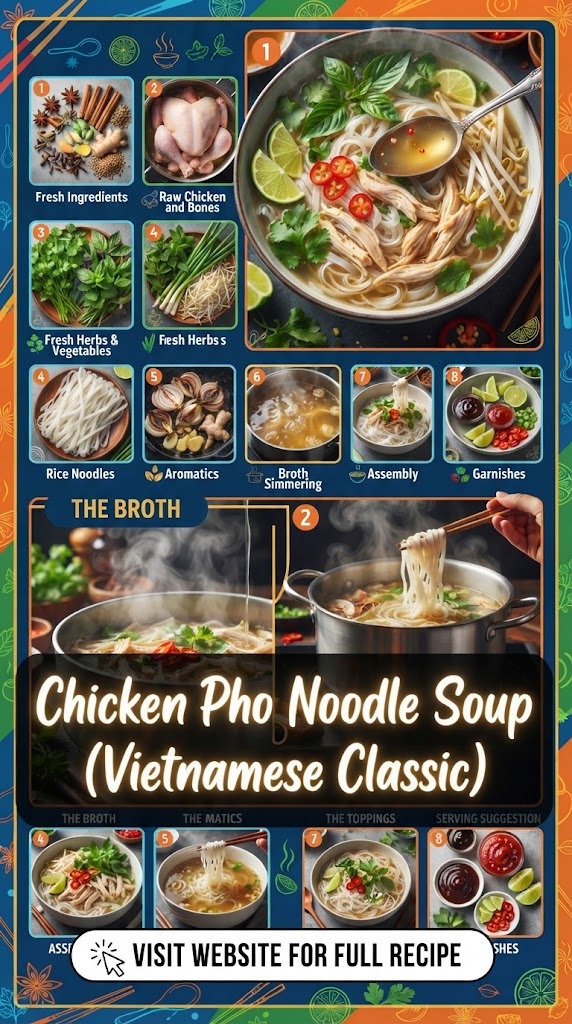
Chicken Pho, or Phở Gà, is one of Vietnam’s most comforting and aromatic noodle soups. It combines a fragrant chicken broth infused with ginger, onion, cinnamon, star anise, and other warming spices with silky rice noodles, tender chicken, fresh herbs, and bright toppings.
Unlike many quick noodle soups, traditional pho gets much of its character from the broth. The goal is a broth that tastes deeply savory but remains clean, light, and fragrant. Roasting or charring the aromatics before simmering gives the soup a wonderful depth, while gently simmering the chicken keeps the meat tender.
This homemade Chicken Pho recipe is designed to give you a flavorful Vietnamese-style bowl without requiring complicated techniques. It is perfect for a cozy family dinner, weekend cooking project, or whenever you want a bowl of comforting noodle soup.
What Is Chicken Pho?
Chicken Pho is a Vietnamese noodle soup made with a clear, aromatic chicken broth, flat rice noodles, chicken, and fresh garnishes.
The Vietnamese name is Phở Gà:
- Phở refers to the rice noodle soup.
- Gà means chicken.
The defining feature is the broth. Rather than relying heavily on thick sauces or rich cream, pho uses aromatic spices and slowly extracted flavors. Ginger, onion, star anise, cinnamon, coriander seeds, and fish sauce create a broth that is savory, fragrant, slightly sweet, and beautifully balanced.
A bowl of pho is traditionally finished with fresh herbs, lime, chilies, and other toppings. This lets everyone customize their bowl.
Why You’ll Love This Chicken Pho Recipe
There are plenty of reasons to make Chicken Pho at home.
1. Deeply aromatic broth
The combination of charred onion, ginger, cinnamon, star anise, and coriander gives the broth a distinctive Vietnamese flavor.
2. Tender chicken
Chicken thighs provide juicy, flavorful meat, while chicken breasts can be used if you prefer leaner meat.
3. Fresh toppings
Cilantro, Thai basil, green onions, bean sprouts, lime, and chilies add freshness and texture.
4. Comforting but not heavy
Unlike creamy soups, pho has a clean broth that feels satisfying without being overly rich.
5. Customizable
You can make your bowl spicy, extra herby, more citrusy, or packed with crunchy vegetables.
6. Great for meal prep
The broth and chicken can be prepared ahead, making it easy to assemble fresh bowls later.
Chicken Pho Ingredients
For the Chicken Broth
- 8 cups chicken stock
- 2 pounds bone-in, skin-on chicken thighs
- 1 medium yellow onion
- 1 large piece fresh ginger, about 3 inches
- 3 whole star anise
- 1 cinnamon stick
- 1 teaspoon coriander seeds
- 2 whole cloves
- 1 tablespoon fish sauce
- 1 teaspoon granulated sugar
- 1 teaspoon salt, plus more as needed
- 2 green onions
- 1 small bunch cilantro stems, optional
- 4 cups water, as needed
For the Noodles
- 12 ounces dried flat rice noodles
- Water for soaking or cooking
- A pinch of salt, optional
For Serving
- 1 cup fresh bean sprouts
- ½ cup fresh cilantro leaves
- ½ cup Thai basil leaves
- 3 green onions, thinly sliced
- 1–2 fresh jalapeños or Thai chilies, thinly sliced
- 1 lime, cut into wedges
- Fresh mint, optional
- Thinly sliced red onion, optional
- Hoisin sauce, optional
- Sriracha or chili sauce, optional
Ingredient Notes
Chicken
Bone-in chicken thighs are excellent for pho because they provide plenty of flavor while remaining tender.
You can also use:
- Chicken breasts
- A whole chicken
- Chicken leg quarters
- A combination of thighs and breasts
For the most flavorful broth, bone-in chicken is preferable.
Chicken Stock
Homemade chicken stock is fantastic, but good-quality store-bought low-sodium chicken stock works very well.
Using low-sodium stock gives you better control over the final saltiness because fish sauce and salt are added later.
Ginger
Fresh ginger is extremely important.
Do not replace fresh ginger with powdered ginger if you can avoid it. Fresh ginger provides the clean, spicy aroma that makes the broth taste like pho.
Onion
Yellow onion works well, although white or sweet onion can also be used.
Charring the onion before adding it to the broth adds complexity and subtle sweetness.
Star Anise
Star anise provides one of pho’s signature aromas.
You don’t need a large amount. A few whole pods are enough to perfume the broth.
Cinnamon
Use a cinnamon stick rather than ground cinnamon.
Ground cinnamon can make the broth cloudy and overpowering.
Fish Sauce
Fish sauce adds savory depth and a subtle fermented richness.
Don’t worry if you don’t normally like fish sauce. When properly balanced with the broth, it should not make the soup taste strongly fishy.
How to Make Chicken Pho
Step 1: Prepare the Aromatics
Start by preparing the onion and ginger.
Cut the onion in half. Peel the ginger and cut it into several thick slices or leave it in large pieces.
Heat a dry skillet over medium-high heat.
Place the onion cut-side down in the skillet along with the ginger.
Cook for several minutes until the surfaces become deeply browned and slightly charred.
You can also char them directly over a gas flame using tongs, but a skillet is easier and safer for most home cooks.
The goal isn’t to completely burn them. You want dark brown spots and a smoky aroma.
Remove them from the pan and set aside.
Step 2: Toast the Spices
In the same dry skillet, add:
- Star anise
- Cinnamon stick
- Coriander seeds
- Cloves
Toast the spices over medium heat for about 1–2 minutes.
Shake the pan frequently.
As soon as the spices become fragrant, remove them from the heat.
Be careful not to burn them.
Toasting releases the essential oils and makes the finished broth significantly more aromatic.
Step 3: Prepare the Chicken
Place the chicken thighs into a large stockpot.
Add the chicken stock and water.
Bring the liquid slowly toward a simmer.
Do not aggressively boil the chicken.
A gentle simmer produces a cleaner broth and helps keep the chicken tender.
As foam rises to the surface, use a spoon or fine mesh skimmer to remove it.
This step helps produce a clearer broth.
Step 4: Add the Aromatics
Add the charred onion and ginger to the pot.
Add the toasted:
- Star anise
- Cinnamon
- Coriander seeds
- Cloves
Also add the green onions and cilantro stems if using.
Bring everything to a gentle simmer.
Step 5: Simmer the Chicken
Cover the pot partially and simmer gently for approximately 30–45 minutes, depending on the size of your chicken pieces.
The chicken should be fully cooked and tender.
Avoid a hard boil.
A violent boil can cause the broth to become cloudy and can make the chicken tougher.
Step 6: Remove the Chicken
When the chicken is cooked through, carefully remove it from the broth.
Place it on a plate and allow it to cool enough to handle.
Remove the meat from the bones.
Discard the skin and bones if desired.
Shred or slice the chicken into bite-sized pieces.
Set it aside.
Step 7: Continue Cooking the Broth
Return the broth to a gentle simmer.
For a quick homemade pho, continue simmering for another 30–60 minutes.
If you have extra time, you can simmer the broth longer for additional depth.
However, longer cooking isn’t automatically better. Chicken pho is traditionally lighter and more delicate than some beef-based pho broths.
Taste the broth periodically.
Step 8: Strain the Broth
Place a fine-mesh strainer over a clean pot or large bowl.
Carefully pour the broth through the strainer.
Discard the cooked aromatics and spices.
This produces a clean broth.
Return the strained broth to the pot.
Step 9: Season the Broth
Now add:
- Fish sauce
- Sugar
- Salt
Start with the smaller amounts.
Taste carefully.
The broth should be:
- Savory
- Aromatic
- Slightly sweet
- Lightly salty
- Balanced
- Fragrant
If it tastes flat, add a little more fish sauce or salt.
If it tastes too salty, add a little water or unsalted stock.
If the spice flavor is too strong, dilute the broth slightly.
Step 10: Prepare the Rice Noodles
Rice noodles cook quickly, so don’t prepare them too early.
Follow the package instructions because different brands have different soaking and cooking times.
For many dried pho noodles, soaking them in warm water until flexible is enough before briefly cooking them in boiling water.
Do not overcook the noodles.
They should be tender but still have a pleasant bite.
Drain thoroughly.
Step 11: Prepare the Garnishes
While the broth is simmering, prepare your toppings.
Wash and dry:
- Cilantro
- Thai basil
- Mint
- Bean sprouts
Slice:
- Green onions
- Jalapeños
- Thai chilies
- Red onion
Cut the lime into wedges.
Arrange everything on a serving plate so people can add their favorite toppings.
Step 12: Assemble the Chicken Pho
Place a portion of cooked rice noodles into each bowl.
Top with sliced or shredded chicken.
Ladle very hot broth over the chicken and noodles.
The hot broth warms everything and brings the flavors together.
Add:
- Cilantro
- Thai basil
- Green onions
- Bean sprouts
- Chilies
- Lime
Serve immediately.
Complete Chicken Pho Recipe Card
Chicken Pho Noodle Soup
Cuisine: Vietnamese
Course: Main Course
Preparation Time: 25 minutes
Cooking Time: 1½–2 hours
Total Time: About 2 hours
Servings: 4–6
Difficulty: Moderate
Ingredients
Broth
- 8 cups chicken stock
- 2 pounds bone-in chicken thighs
- 1 yellow onion, halved
- 3-inch piece fresh ginger
- 3 star anise
- 1 cinnamon stick
- 1 teaspoon coriander seeds
- 2 cloves
- 1 tablespoon fish sauce
- 1 teaspoon sugar
- 1 teaspoon salt
- 2 green onions
- 4 cups water
Noodles
- 12 ounces flat rice noodles
Garnishes
- Bean sprouts
- Thai basil
- Cilantro
- Green onions
- Lime wedges
- Jalapeños
- Thai chilies
- Mint
- Thinly sliced red onion
Detailed Cooking Instructions
1. Char the onion and ginger
Place halved onion and ginger in a dry skillet over medium-high heat.
Cook until deeply browned and lightly charred.
2. Toast the spices
Toast star anise, cinnamon, coriander seeds, and cloves for 1–2 minutes until fragrant.
3. Cook the chicken
Add chicken thighs, chicken stock, and water to a large pot.
Bring to a gentle simmer.
Skim away foam.
4. Add aromatics
Add charred onion, ginger, toasted spices, green onions, and cilantro stems.
5. Simmer
Cook gently for 30–45 minutes or until chicken is fully cooked.
6. Remove chicken
Take chicken from the pot.
Cool slightly, then remove meat from bones and shred or slice.
7. Simmer broth
Continue simmering the broth for another 30–60 minutes.
8. Strain
Strain the broth through a fine-mesh sieve.
9. Season
Add fish sauce, sugar, and salt.
Taste and adjust.
10. Cook noodles
Prepare rice noodles according to package directions.
Drain well.
11. Assemble
Divide noodles between bowls.
Add chicken.
Pour hot broth over everything.
12. Garnish
Add herbs, bean sprouts, green onions, chilies, and lime.
Serve immediately.
Tips for the Best Chicken Pho
1. Don’t skip charring the onion
This is one of the easiest ways to add depth to homemade pho.
The charred edges contribute subtle smoky and caramelized notes.
2. Don’t boil the broth aggressively
Keep the heat low.
You want gentle bubbles rather than a rolling boil.
This helps maintain a cleaner broth.
3. Skim the broth
During the first part of cooking, foam and impurities can rise to the surface.
Removing them helps create a cleaner-looking soup.
4. Don’t overcook the noodles
Rice noodles can become soft very quickly.
If you’re serving the soup immediately, cook them just until tender.
5. Season at the end
Chicken stock varies considerably in saltiness.
It’s better to add fish sauce and salt gradually after the broth has developed its flavor.
6. Use fresh herbs
Fresh herbs aren’t merely decoration.
They provide an important contrast to the warm spices and savory broth.
Thai basil is especially delicious.
How to Make the Broth Even More Flavorful
If you have more time, you can make a richer broth using a whole chicken or additional chicken bones.
Simmer the bones gently with the aromatics for several hours.
You can also prepare the broth one day ahead.
After refrigerating it overnight, any fat that rises to the surface will solidify. You can remove some of it before reheating.
However, don’t remove every bit of fat. A small amount contributes flavor and mouthfeel.
Can You Use Chicken Breast?
Absolutely.
Chicken breast is leaner and works well if you prefer white meat.
However, it can dry out more easily than chicken thighs.
If using chicken breasts, monitor them carefully and remove them from the broth as soon as they are cooked through.
Allow them to rest before slicing.
Can You Use a Whole Chicken?
Yes.
A whole chicken is an excellent choice when serving a larger family.
Place the chicken in the pot with the aromatics and simmer gently until cooked.
Remove the chicken, allow it to cool, then shred the meat.
Return some of the meat to the finished soup while reserving the rest for leftovers.
Chicken Pho Topping Ideas
One of the best parts of pho is customization.
Fresh herbs
Use:
- Thai basil
- Cilantro
- Mint
- Vietnamese coriander if available
Crunchy toppings
Try:
- Bean sprouts
- Thinly sliced cabbage
- Sliced radishes
- Julienned carrots
Spicy toppings
Use:
- Jalapeños
- Thai chilies
- Red chili flakes
- Sriracha
Acidic toppings
Fresh lime is the classic choice.
A squeeze of lime brightens the entire bowl.
What to Serve With Chicken Pho
Pho can easily be served as a complete meal by itself.
If you’re serving a larger Vietnamese-inspired meal, consider adding:
- Fresh spring rolls
- Vietnamese chicken salad
- Cucumber salad
- Steamed vegetables
- Vietnamese-style fried rice
- Fresh fruit
Keep side dishes relatively light because pho is already filling.
How to Store Chicken Pho
Store the broth, chicken, noodles, and toppings separately whenever possible.
Place cooled broth in an airtight container and refrigerate.
Cooked chicken can also be refrigerated separately.
Fresh herbs should be stored separately so they remain crisp.
Rice noodles are best prepared fresh because they can become soft after sitting in broth.
How Long Does Chicken Pho Last?
Properly refrigerated chicken broth and cooked chicken are generally best consumed within 3–4 days.
Always refrigerate leftovers promptly in shallow containers.
If the broth develops an unusual odor, appearance, or taste, discard it.
Can Chicken Pho Be Frozen?
Yes.
The broth freezes very well.
For best results, freeze the broth and cooked chicken separately from the noodles and fresh toppings.
Allow the broth to cool before freezing.
Use freezer-safe containers and leave some space for expansion.
When ready to eat, thaw the broth safely in the refrigerator and reheat until steaming hot.
Prepare fresh noodles and garnishes when serving.
How to Reheat Chicken Pho
Warm the broth gently in a saucepan.
Don’t repeatedly boil the broth for a long period because this can affect the texture of the chicken and intensify the seasoning.
Prepare fresh noodles separately.
Place noodles and chicken in serving bowls, then pour the hot broth over them.
Finish with fresh herbs and lime.
Common Chicken Pho Mistakes
Mistake 1: Using too much spice
Pho should be aromatic, not dominated by cinnamon or star anise.
Use spices moderately.
Mistake 2: Over-salting the broth
Fish sauce adds saltiness, so add it gradually.
Mistake 3: Boiling hard
A vigorous boil can make the broth cloudy and the chicken less tender.
Mistake 4: Cooking noodles too early
Rice noodles can become mushy if they sit for too long.
Mistake 5: Skipping fresh toppings
Fresh herbs, lime, and chilies provide the contrast that makes pho special.
Mistake 6: Not tasting the broth
Seasoning should always be adjusted according to taste.
How to Make Chicken Pho Faster
Traditional broth can take several hours, but you can make a flavorful weeknight version.
Use:
- Good-quality chicken stock
- Boneless chicken thighs
- Charred onion
- Fresh ginger
- Whole spices
- Rice noodles
Simmer the broth for about 45–60 minutes.
The flavor won’t be identical to an extremely long-simmered broth, but it can still make a delicious homemade meal.
How to Make It More Authentic-Tasting
The most important elements are balance and aroma.
Focus on:
- Fresh ginger
- Charred onion
- Whole spices
- Quality chicken
- Fish sauce
- Fresh rice noodles
- Fresh herbs
- Lime
Avoid adding large amounts of strong sauces directly into the broth.
Instead, let diners customize their individual bowls.
Serving Suggestions
For the best presentation, use large, deep bowls.
Start with the noodles.
Arrange the chicken neatly on top.
Pour the steaming broth around the chicken.
Finish with colorful herbs and thinly sliced chilies.
Place lime wedges alongside the bowl.
The finished dish should look vibrant and inviting, with the clear broth visible around the noodles.
Frequently Asked Questions
Is chicken pho healthy?
Chicken pho can be part of a balanced meal. It provides protein from chicken, carbohydrates from rice noodles, and vitamins and minerals from herbs and vegetables.
The sodium level can be significant because chicken stock and fish sauce contain salt, so choose lower-sodium stock and season gradually if you are watching sodium intake.
What does chicken pho taste like?
Chicken pho has a savory, aromatic, slightly sweet broth with gentle notes of ginger, cinnamon, star anise, and coriander.
Fresh lime and herbs add brightness.
What noodles are used for pho?
Traditional pho uses flat Vietnamese rice noodles called bánh phở.
They are usually white, smooth, and relatively flat.
Can I use leftover chicken?
Yes.
If you already have cooked chicken, prepare the aromatic broth separately and add the chicken toward the end just long enough to warm it.
Can I make pho without fish sauce?
Yes, although fish sauce contributes important savory depth.
You can substitute a small amount of soy sauce or another savory seasoning, but the flavor will be different.
Can I make gluten-free chicken pho?
Traditional rice noodles are naturally gluten-free, but check the labels on your stock, fish sauce, sauces, and other packaged ingredients to make sure they meet your dietary requirements.
Can I make it spicy?
Absolutely.
Add sliced Thai chilies, jalapeños, chili flakes, or your favorite chili sauce.
For maximum control, add spice to individual bowls rather than the entire pot.
Nutrition Information
Approximate nutrition per serving will vary depending on the chicken, noodles, stock, and amount of fish sauce used.
A typical bowl provides:
- Protein from chicken
- Carbohydrates from rice noodles
- Fat from chicken and broth
- Fiber and micronutrients from herbs and vegetables
For a lighter bowl, use skinless chicken breast, increase the herbs and vegetables, and reduce the noodle portion.
Final Thoughts
Homemade Chicken Pho Noodle Soup is a wonderful example of how simple ingredients can create an incredibly aromatic meal. The secret isn’t complicated cooking—it is layering flavor carefully.
Char the onion and ginger. Toast the spices. Simmer the chicken gently. Skim the broth. Season gradually. Prepare the noodles separately. Then finish everything with plenty of fresh herbs, lime, and your favorite toppings.
The result is a bowl of steaming Vietnamese-style Chicken Pho with tender chicken, silky rice noodles, fragrant broth, fresh herbs, and bright citrus.
Whether you’re making it for a quiet weekend dinner or preparing a comforting meal for the whole family, this recipe is a delicious way to bring the flavors of Vietnamese cuisine into your kitchen.
Pro tip: Make extra broth and freeze it. Having homemade pho broth ready in the freezer makes a future bowl of Chicken Pho much faster to prepare.