
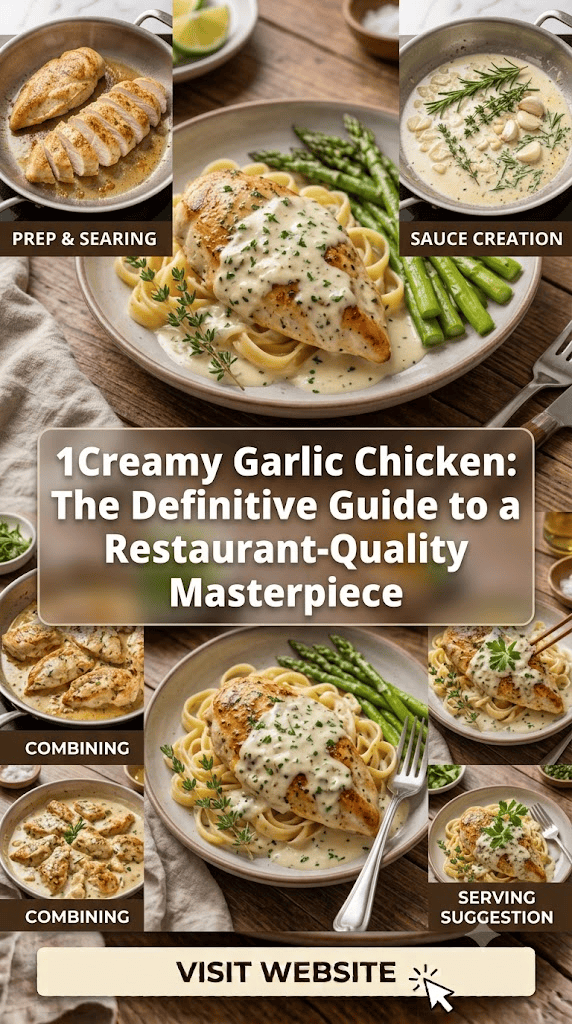
Creamy Garlic Chicken: The Definitive Guide to a Restaurant-Quality Masterpiece
The Ultimate Creamy Garlic Chicken: The Definitive Guide to a Restaurant-Quality Masterpiece
There are few dishes in the culinary world that strike the perfect balance between sophisticated elegance and soul-warming comfort like Creamy Garlic Chicken. This dish is the cornerstone of modern home cooking—a versatile, one-pan wonder that transforms humble ingredients into a five-star experience. Whether you are hosting a formal dinner party or looking for a quick 30-minute weeknight meal that will have the kids asking for seconds, mastering the creamy garlic sauce is a skill every home chef should possess.
This guide is designed to be more than just a recipe. It is a deep dive into the chemistry of flavor, the art of the perfect sear, and the science of emulsification. We will explore every facet of this dish, from selecting the finest poultry to pairing it with the perfect vintage of wine.
1. Ingredients
The foundation of any great dish lies in the quality of its components. For Creamy Garlic Chicken, every ingredient plays a dual role in texture and taste.
Ingredients Form
- Chicken Breasts: 1.5 lbs (approx. 3 large breasts). Opt for air-chilled chicken if possible, as it retains less water and sears more effectively.
- Fresh Garlic: 6 to 8 cloves. This is the star of the show. Using fresh cloves rather than pre-minced jarred garlic is non-negotiable for the depth of flavor required.
- Heavy Cream: 1.5 cups. For a truly luxurious mouthfeel, high-fat heavy cream is essential. It resists curdling when exposed to the acidic elements of the dish.
- Parmesan Cheese: 1/2 cup, freshly grated. Avoid the green shaker cans; you need the nutty, salty melt of real Parmigiano-Reggiano.
- Chicken Broth: 1/2 cup. This provides the base for the sauce and helps deglaze the pan.
- Butter: 2 tablespoons, unsalted. This adds a silky finish to the sauce known as “monter au beurre.”
- Olive Oil: 1 tablespoon, high smoke point for searing.
- Flour: 1/4 cup, all-purpose. Used to dredge the chicken for a golden crust and to help thicken the sauce.
- Herbs: 1 teaspoon dried oregano, 1/2 teaspoon paprika, and fresh parsley for garnish.
- Salt and Pepper: To taste. Kosher salt and freshly cracked black pepper are preferred.
2. Preparation
Preparation is the silent hero of the kitchen. Proper “mise en place”—having everything in its place—ensures that the cooking process is fluid and stress-free.
To begin, you must address the chicken. Large chicken breasts are often uneven in thickness, which leads to the thinner end drying out while the thicker end remains undercooked. To fix this, slice the breasts in half lengthwise to create “cutlets.” If they are still uneven, place them between sheets of plastic wrap and gently pound them with a meat mallet to a uniform thickness of about half an inch. This ensures every bite is equally juicy.
Next, prepare your garlic. For this recipe, we recommend a combination of techniques. Mince four cloves finely to melt into the sauce, and thinly slice the remaining four. The sliced garlic will become slightly toasted and provide a different textural element and a mellow, nutty flavor profile.
3. Searing
The sear is where the magic happens. This is known as the Maillard reaction—a chemical reaction between amino acids and reducing sugars that gives browned food its distinctive flavor.
Dredge each chicken cutlet in a mixture of flour, salt, pepper, and paprika. Shake off the excess; you want a light veil, not a heavy batter. Heat your oil and one tablespoon of butter over medium-high heat. Once the butter is foaming, add the chicken.
Do not overcrowd the pan. If the chicken pieces are touching, they will steam rather than sear. Cook for 4-5 minutes per side until a deep golden crust forms. The chicken doesn’t need to be fully cooked through at this stage, as it will finish in the sauce. Remove the chicken to a plate and tent it loosely with foil.
4. Aromatics
Now, turn your attention to the “fond”—those brown bits stuck to the bottom of the pan. This is concentrated flavor. Reduce the heat to medium and add the remaining butter. Toss in your minced and sliced garlic.
The key here is patience. You want to sauté the garlic until it is fragrant and just beginning to turn golden. If you burn the garlic, it will turn bitter, and you will have to start the sauce over. The aroma should be sweet and pungent, filling your kitchen with an irresistible scent. This is also the time to add your dried herbs (oregano and thyme), allowing the heat to “bloom” the dried spices and release their essential oils.
5. Deglazing
Deglazing is the process of adding liquid to a hot pan to loosen the caramelized bits at the bottom. Pour in your chicken broth. As it bubbles, use a wooden spoon to scrape the bottom of the pan vigorously.
This step integrates the concentrated chicken flavor into what will become your sauce. Let the broth reduce by half. This concentration of liquid ensures that the final sauce isn’t watery but has a robust, meaty backbone that supports the richness of the cream.
6. Emulsifying
Once the broth has reduced, lower the heat to medium-low. Slowly pour in the heavy cream, whisking constantly. The goal is to create a seamless emulsion.
As the cream heats up, it will begin to thicken. This is a transformative moment where the sharp garlic and salty pan drippings marry with the mellow fat of the cream. Let the sauce simmer gently. Never let a cream-based sauce reach a hard boil, as this can cause the fats to separate, resulting in an oily texture. A gentle bubble is all you need to achieve that “nappe” consistency—where the sauce is thick enough to coat the back of a spoon.
7. Cheese
The addition of Parmesan cheese is the final step in creating a sauce with structural integrity and a complex flavor profile. Parmesan acts as both a seasoning and a thickener.
Whisk in the cheese a handful at a time, allowing each batch to melt completely before adding more. The saltiness of the Parmesan means you likely won’t need to add much additional salt to the sauce. Taste as you go. The sauce should feel heavy on the tongue, with a sharp kick of garlic followed by the savory depth of the aged cheese.
8. Assembly
Place the rested chicken cutlets (and any juices that have accumulated on the plate) back into the simmering sauce. The juices are “liquid gold” and should never be discarded.
Use a spoon to spoon the sauce over the chicken, ensuring every inch is coated. Let the chicken simmer in the sauce for another 2-3 minutes. This allows the chicken to reach a safe internal temperature of 165°F (74°C) while simultaneously absorbing the flavors of the garlic and cream. The flour coating on the chicken will also slightly thicken the sauce even further at this stage.
9. Garnishing
We eat with our eyes first. A dish this rich needs a pop of color and a hit of freshness to balance the palate. Freshly chopped Italian flat-leaf parsley is the classic choice. It adds a clean, peppery note that cuts through the fat of the cream.
For those who enjoy a bit of heat, a sprinkle of red pepper flakes adds a beautiful visual contrast and a subtle tingle of spice that complements the garlic. A final crack of black pepper and perhaps a small squeeze of lemon juice can brighten the entire dish, lifting the heavy flavors and making them sing.
10. Sides
Choosing the right side dish for Creamy Garlic Chicken is a matter of managing the sauce. You want something that can act as a vessel for the extra cream.
- Pasta: Linguine or fettuccine are the traditional choices. The long strands provide ample surface area for the sauce to cling to.
- Mashed Potatoes: For the ultimate comfort meal, serve the chicken over garlic mashed potatoes. The creaminess of the potatoes mimics the sauce for a seamless experience.
- Crusty Bread: A warm baguette or sourdough loaf is essential for “mopping up” every last drop of sauce from the plate.
- Veggies: To keep the meal balanced, opt for roasted asparagus, steamed broccoli, or a light arugula salad with a lemon vinaigrette. The acidity of a salad provides a necessary contrast to the richness of the main course.
11. Customization
One of the reasons this recipe is a global favorite is its adaptability. You can easily tweak the ingredients to suit different dietary needs or flavor preferences.
- The Tuscan Twist: Add sun-dried tomatoes and fresh baby spinach during the simmering phase (Step 6). The spinach will wilt into the sauce, adding nutrients and a beautiful green hue.
- Keto Version: This dish is naturally low-carb. To make it strictly Keto, skip the flour dredging and simply season and sear the chicken. Serve over zoodles (zucchini noodles) or cauliflower rice.
- Dairy-Free: Use full-fat coconut milk (the canned variety) and nutritional yeast instead of Parmesan. While the flavor profile will shift toward a slightly nutty, tropical note, the texture remains delightfully creamy.
- Mushroom Lovers: Sauté sliced cremini or shiitake mushrooms along with the garlic for an earthy, umami-rich variation.
12. Recipe Form
Complete Recipe Form
| Step | Action | Key Detail |
|---|---|---|
| 1 | Prep Chicken | Slice into cutlets, pound to even thickness. |
| 2 | Dredge | Coat in flour, salt, pepper, and paprika. |
| 3 | Sear | Cook in oil/butter for 5 mins per side until golden. |
| 4 | Aromatics | Sauté minced and sliced garlic in butter. |
| 5 | Deglaze | Add chicken broth and scrape the pan bits. |
| 6 | Simmer | Add heavy cream and let thicken over low heat. |
| 7 | Finish Sauce | Whisk in Parmesan cheese until melted. |
| 8 | Combine | Return chicken to pan and simmer for 3 minutes. |
| 9 | Garnish | Add fresh parsley and red pepper flakes. |
| 10 | Serve | Pair with pasta, potatoes, or vegetables. |
13. Troubleshooting
Even the best chefs encounter issues. Here is how to fix common mistakes:
- The Sauce is Too Thin: Let it simmer for a few more minutes. If it’s still too thin, mix a teaspoon of cornstarch with a teaspoon of cold water (a slurry) and whisk it into the sauce.
- The Sauce is Too Thick: Whisk in a splash of chicken broth or milk until the desired consistency is reached.
- The Sauce Curdled: This usually happens if the heat is too high or if you used low-fat milk instead of heavy cream. To fix a broken sauce, try whisking in a tablespoon of very hot water or more heavy cream while vigorously stirring off the heat.
- The Garlic is Bitter: This means the garlic burned during the sautéing phase. Unfortunately, the only fix is to wipe out the pan and start the sauce again from the aromatic stage.
14. Pro Tips
To take your Creamy Garlic Chicken from “good” to “legendary,” follow these expert tips:
- Room Temperature Meat: Take your chicken out of the fridge 20 minutes before cooking. Cold meat causes the pan temperature to drop, preventing a good sear.
- Use a Stainless Steel Pan: While non-stick is easier to clean, stainless steel or cast iron produces a much better “fond” (the brown bits), which is the secret to a professional-grade sauce.
- Freshly Grated Cheese Only: Pre-shredded cheese is coated in potato starch or cellulose to prevent clumping in the bag. This coating prevents the cheese from melting smoothly into the sauce, often resulting in a grainy texture.
- Rest the Meat: Even though the chicken is in the sauce, it still benefits from a few minutes of resting before you slice into it. This allows the fibers to reabsorb the juices.
15. Storage
Creamy Garlic Chicken makes for incredible leftovers, as the flavors continue to develop overnight.
- Refrigeration: Store in an airtight container for up to 3-4 days.
- Reheating: This is the tricky part. Cream sauces can separate when microwaved. The best way to reheat is on the stovetop over low heat. Add a splash of water, milk, or broth to loosen the sauce as it warms up.
- Freezing: While you can freeze this dish, dairy-based sauces often change texture upon thawing, becoming slightly grainy. If you must freeze it, do so for no more than a month, and thaw it slowly in the refrigerator before reheating.
16. FAQ
Q: Can I use chicken thighs instead of breasts? A: Absolutely. Chicken thighs are more forgiving and remain juicy even if slightly overcooked. Use boneless, skinless thighs and follow the same searing instructions. They may require an extra 2-3 minutes of cooking time.
Q: Is there a substitute for heavy cream? A: You can use half-and-half, but the sauce will be thinner and more prone to curdling. If using half-and-half, do not let the sauce boil. For a lighter version, Greek yogurt can be whisked in at the very end (off the heat), though it will add a tangy flavor.
Q: How do I prevent the garlic from burning? A: Keep your garlic pieces uniform in size and keep them moving in the pan. Have your liquid (broth) ready to go so you can pour it in the moment the garlic turns golden.
Q: Can I make this dish ahead of time? A: You can prepare the chicken and the sauce separately up to a day in advance. Combine them and heat through gently when you are ready to serve.
17. The Science of Flavor
Understanding why this dish works helps you become a better cook. The success of Creamy Garlic Chicken relies on the “Fat + Acid + Salt + Heat” framework.
- Fat: Provided by the butter, oil, and heavy cream. Fat carries flavor and provides the luxurious mouthfeel.
- Acid: Provided by the chicken broth (and an optional squeeze of lemon). Acid cuts through the heaviness of the fat, keeping the dish from feeling cloying.
- Salt: Provided by the kosher salt and the Parmesan cheese. Salt enhances all other flavors.
- Heat: The high heat of the sear creates complex sugars, while the low heat of the simmer allows for the integration of flavors.
By mastering these four elements, you aren’t just following a recipe; you are orchestrating a culinary experience.
18. Conclusion
The Creamy Garlic Chicken is a testament to the power of simple ingredients treated with respect. It is a dish that feels like a warm hug, yet carries the sophistication of a high-end bistro. By following this comprehensive guide, you have the tools to create a meal that is consistently perfect.
Whether you are cooking for a loved one, prepping meals for a busy week, or simply treating yourself to a gourmet dinner, this recipe stands as a reliable, delicious, and impressive staple. The golden crust of the chicken, the pungent aroma of toasted garlic, and the silky embrace of the Parmesan cream sauce come together to create a symphony of flavor that is truly unforgettable.
Now, it’s time to head to the kitchen, sharpen your knives, and bring this masterpiece to life. Happy cooking!