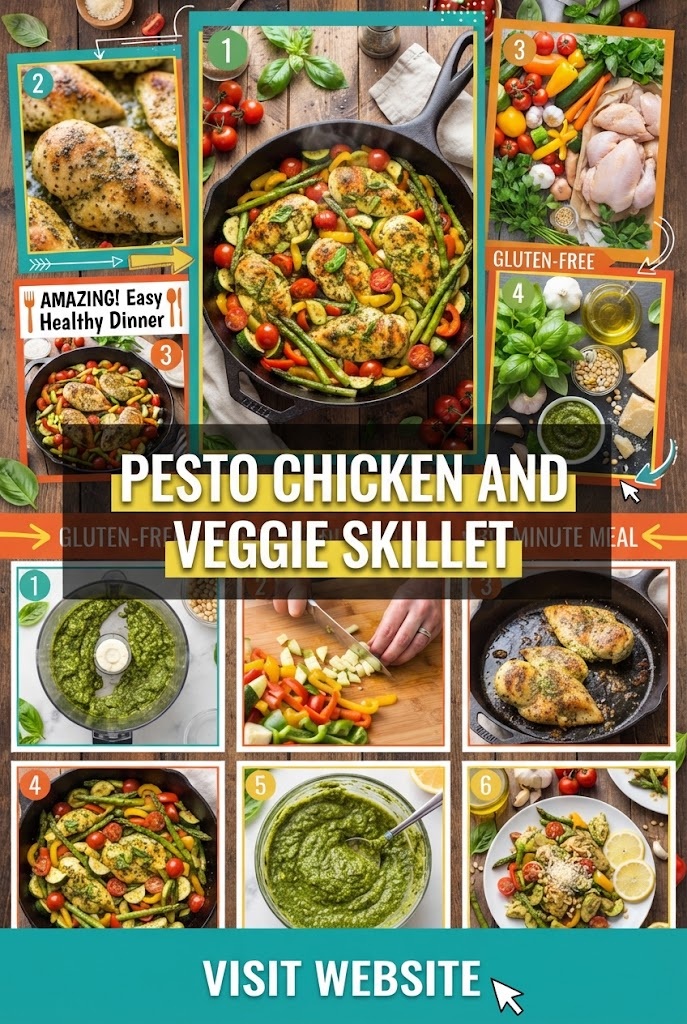
Pesto Chicken and Veggie Skillet
Pesto Chicken and Veggie Skillet is a colorful, flavorful, and satisfying one-pan dinner that brings together tender chicken, crisp-tender vegetables, aromatic garlic, and rich basil pesto. It is an excellent choice when you want something that tastes special but does not require complicated preparation or a mountain of dishes afterward.
The beauty of this recipe is its flexibility. You can use chicken breast or boneless chicken thighs, swap in your favorite vegetables, adjust the amount of pesto, and even add pasta, rice, quinoa, or crusty bread if you want a heartier meal. The combination of juicy chicken and vegetables coated in creamy, herby pesto creates a comforting dinner that feels fresh at the same time.
This skillet is particularly useful for busy weeknights because most of the cooking happens in one pan. The chicken is browned first to build flavor, the vegetables are cooked until tender, and everything is finished with pesto for a bright, savory sauce.
Why You’ll Love This Pesto Chicken and Veggie Skillet
There are plenty of reasons to make this recipe part of your regular dinner rotation.
One-pan convenience
Everything cooks in one large skillet, which means less cleanup after dinner. You can prepare the ingredients, cook them in stages, and finish the entire meal in the same pan.
Full of flavor
Basil pesto provides an instant combination of basil, garlic, olive oil, Parmesan cheese, and nuts. Instead of preparing a complicated sauce from scratch, you can create a flavorful coating with just a few spoonfuls.
Plenty of vegetables
Bell peppers, zucchini, cherry tomatoes, and spinach add color, texture, and freshness. You can also use broccoli, mushrooms, asparagus, green beans, or other vegetables you have available.
High-protein dinner
Chicken provides satisfying protein, while the vegetables add fiber and nutrients. Serve the skillet by itself for a lighter meal or pair it with pasta, rice, potatoes, or bread for something more substantial.
Easy to customize
This recipe is forgiving. You can change the vegetables, use different seasonings, add cheese, make it spicy, or use a different type of pesto.
Complete Recipe
Pesto Chicken and Veggie Skillet
Prep Time: 15 minutes
Cook Time: 20–25 minutes
Total Time: 35–40 minutes
Servings: 4
Course: Dinner
Cuisine: Italian-inspired
Cooking Method: Stovetop skillet
Difficulty: Easy
Ingredients
For the Chicken
- 1 ½ pounds boneless, skinless chicken breasts
- 1 tablespoon olive oil
- 1 teaspoon Italian seasoning
- ½ teaspoon garlic powder
- ½ teaspoon paprika
- ½ teaspoon salt, or to taste
- ¼ teaspoon black pepper
- ¼ teaspoon onion powder
For the Vegetables
- 1 medium zucchini, sliced into half-moons
- 1 red bell pepper, sliced
- 1 yellow bell pepper, sliced
- 1 cup cherry tomatoes, halved
- 2 cups fresh baby spinach
- 3 cloves garlic, finely minced
- 1 small yellow onion, thinly sliced
For the Pesto Sauce
- ½ cup prepared basil pesto
- 2 tablespoons chicken broth or water
- 2 tablespoons freshly grated Parmesan cheese
- 1 tablespoon lemon juice
For Cooking and Finishing
- 1 tablespoon olive oil, as needed
- ¼ cup freshly grated Parmesan cheese
- 2 tablespoons fresh basil, chopped
- ¼ teaspoon red pepper flakes, optional
- Lemon wedges, for serving
- Additional black pepper, to taste
Ingredient Notes
Chicken
Boneless, skinless chicken breasts are ideal because they cook quickly and remain lean. Cut them into bite-sized pieces so they cook evenly and develop plenty of browned edges.
Chicken thighs are another excellent option. They contain more fat than chicken breast and tend to stay particularly juicy.
If using very large chicken breasts, slice them horizontally or cut them into smaller pieces before cooking.
Basil Pesto
Pesto is the star of this recipe. Store-bought pesto works perfectly for convenience, while homemade pesto can provide an even fresher flavor.
Look for a pesto made primarily with basil, olive oil, Parmesan or another hard cheese, garlic, and nuts.
Because pesto can vary in saltiness, taste the finished skillet before adding additional salt.
Zucchini
Zucchini cooks quickly and absorbs the pesto beautifully. Cut it into reasonably thick half-moons so it does not become mushy.
Bell Peppers
Using two different colors makes the skillet especially attractive, but you can use whatever bell pepper you have.
Red, yellow, orange, and green peppers all work.
Cherry Tomatoes
Cherry tomatoes add sweetness and acidity. As they cook, they soften and release some juice into the skillet.
For an especially fresh result, you can reserve a few tomatoes and add them near the end.
Spinach
Fresh spinach wilts quickly. Add it toward the end rather than cooking it with the chicken and harder vegetables.
How to Prepare the Ingredients
Before heating the skillet, prepare everything.
Cut the chicken into approximately 1-inch pieces. Try to keep the pieces similar in size so they cook at the same rate.
Slice the zucchini into half-moons.
Remove the seeds and membranes from the bell peppers, then cut them into strips.
Halve the cherry tomatoes.
Thinly slice the onion.
Mince the garlic.
Measure the pesto and prepare the Parmesan.
Having everything ready before cooking makes this recipe much easier because the cooking process moves quickly.
How to Cook Pesto Chicken and Veggie Skillet
Step 1: Season the Chicken
Place the chicken pieces in a bowl.
Add:
- Italian seasoning
- Garlic powder
- Paprika
- Salt
- Black pepper
- Onion powder
Toss until the chicken is evenly coated.
The seasoning does not need to be complicated because the pesto will provide plenty of flavor later.
Allow the chicken to sit for about 5 minutes while you prepare the skillet.
Step 2: Heat the Skillet
Choose a large skillet that can comfortably hold the chicken and vegetables.
A 12-inch skillet works particularly well.
Place the skillet over medium-high heat and add 1 tablespoon of olive oil.
Allow the oil to heat until it looks slightly shimmering but is not smoking.
A properly heated skillet helps the chicken develop a golden-brown exterior instead of simply steaming.
Step 3: Brown the Chicken
Add the seasoned chicken pieces to the hot skillet in a single layer.
Avoid overcrowding the pan.
Cook the chicken for approximately 3–4 minutes on the first side, then stir or turn the pieces.
Continue cooking for another 3–4 minutes.
The chicken should develop golden-brown edges.
At this stage, the chicken does not necessarily need to be completely finished if the pieces are thick. It will continue cooking later with the vegetables and sauce.
Transfer the chicken to a clean plate.
Do not wipe out the skillet.
Those browned bits left behind are valuable because they add extra flavor to the vegetables.
Step 4: Cook the Onion and Bell Peppers
Add a small amount of olive oil to the same skillet if the pan looks dry.
Add the sliced onion and bell peppers.
Cook for approximately 3 minutes, stirring occasionally.
The vegetables should begin to soften while retaining some texture.
You do not want them completely soft at this point.
Step 5: Add the Zucchini
Add the sliced zucchini.
Cook for another 3–4 minutes.
Stir occasionally so the zucchini cooks evenly.
The zucchini should become tender around the edges while maintaining some firmness in the center.
Avoid overcooking because zucchini releases water as it softens.
Step 6: Add the Garlic
Add the minced garlic.
Cook for approximately 30–60 seconds.
Stir constantly during this step.
Garlic cooks quickly and can become bitter if burned.
As soon as the garlic becomes fragrant, move to the next step.
Step 7: Add the Cherry Tomatoes
Add the halved cherry tomatoes.
Cook for about 2 minutes.
The tomatoes should begin to soften but should not completely collapse.
If you prefer a fresher tomato flavor, you can reserve half of the tomatoes and add them during the final stage instead.
Step 8: Return the Chicken
Return the cooked chicken and any accumulated juices from the plate to the skillet.
Stir everything together.
Reduce the heat to medium.
Cook for approximately 2–3 minutes, allowing the chicken to finish cooking and the flavors to combine.
Chicken should reach a safe internal temperature of 165°F (74°C) at the thickest point.
Step 9: Prepare the Pesto Mixture
While the chicken and vegetables finish cooking, combine the pesto, chicken broth or water, Parmesan cheese, and lemon juice in a small bowl.
Mix until smooth.
The small amount of liquid helps loosen the pesto so it coats the chicken and vegetables more evenly.
Do not add too much liquid. The goal is a thick, flavorful sauce rather than a watery mixture.
Step 10: Add the Pesto
Reduce the skillet heat to low.
Pour the pesto mixture over the chicken and vegetables.
Stir gently until everything is coated.
Allow the skillet to cook for approximately 1–2 minutes.
Do not boil the pesto aggressively.
Pesto tastes freshest when it is warmed gently rather than cooked for a long time over high heat.
Step 11: Add the Spinach
Add the fresh baby spinach.
Use tongs or a spatula to gently fold it into the skillet.
Within 1–2 minutes, the spinach should wilt.
Once the spinach has softened, turn off the heat.
The residual heat will continue to cook the vegetables slightly.
Step 12: Finish the Skillet
Sprinkle the remaining Parmesan cheese over the top.
Add chopped fresh basil.
For a little heat, add red pepper flakes.
Finish with freshly ground black pepper and a squeeze of lemon juice if desired.
Taste the skillet before adding additional salt.
Because pesto and Parmesan are already salty, you may not need much additional seasoning.
How to Know When It Is Done
The chicken should be fully cooked and reach an internal temperature of 165°F (74°C).
The vegetables should be tender but not mushy.
The zucchini should retain some structure.
The bell peppers should be softened while still offering a slight bite.
The tomatoes should be juicy and tender.
The spinach should be wilted.
The pesto should coat the ingredients without becoming watery.
If everything looks glossy, colorful, and evenly coated, the skillet is ready to serve.
Tips for the Best Pesto Chicken
Use a large skillet
A crowded pan causes ingredients to steam instead of brown.
A large 12-inch skillet gives the chicken and vegetables enough room.
Do not overcook the chicken
Chicken breast can become dry when cooked too long.
Cutting it into evenly sized pieces and removing it from the skillet while preparing the vegetables helps prevent overcooking.
Cook vegetables in stages
Different vegetables require different cooking times.
Onions and peppers need longer than spinach, while zucchini cooks somewhere in between.
Adding everything simultaneously can result in some vegetables being overcooked while others remain undercooked.
Add pesto near the end
Pesto does not need extensive cooking.
Adding it during the final stage helps preserve its fresh basil and garlic flavor.
Taste before salting
Pesto and Parmesan can contain considerable salt.
Always taste before adding more.
Use fresh lemon
A small amount of lemon juice can brighten the entire dish.
It balances the richness of pesto and Parmesan.
Vegetable Variations
One of the best things about this recipe is how easily the vegetables can be changed.
Broccoli Pesto Chicken
Replace the zucchini with broccoli florets.
Steam or sauté the broccoli until slightly tender before combining it with the chicken.
Mushroom Pesto Chicken
Add sliced mushrooms after the onions.
Cook until the mushrooms release their moisture and become golden around the edges.
Asparagus Pesto Chicken
Cut asparagus into bite-sized pieces.
Add it after the peppers and cook until tender-crisp.
Green Bean Pesto Chicken
Use trimmed green beans and cook them until bright green and tender.
Spinach and Tomato Version
Use extra spinach and tomatoes for a simpler vegetable combination.
Mediterranean-Style Version
Add olives, roasted red peppers, and a small amount of crumbled feta.
Protein Variations
Although chicken is the main protein, the basic method works with several alternatives.
Chicken Thighs
Boneless chicken thighs are especially juicy and flavorful.
Cut them into small pieces and cook until fully done.
Shrimp
Shrimp cooks much faster than chicken.
Cook the shrimp separately for a few minutes, remove them, prepare the vegetables, and return the shrimp during the final stage.
Turkey
Boneless turkey breast can be substituted for chicken.
Tofu
For a vegetarian variation, use firm or extra-firm tofu.
Press the tofu, cut it into cubes, season it, and brown it before cooking the vegetables.
How to Make It Creamy
If you prefer a creamy pesto skillet, add one of these options:
- ¼ cup heavy cream
- ¼ cup half-and-half
- 2 tablespoons cream cheese
- ¼ cup plain Greek yogurt
For Greek yogurt, remove the skillet from direct heat before stirring it in to reduce the chance of curdling.
You can also add a little extra Parmesan for a thicker sauce.
How to Make It Spicy
For a spicy version, add:
- Red pepper flakes
- Cayenne pepper
- Sliced jalapeños
- Crushed chili peppers
- Spicy pesto
Start with a small amount and increase according to your preference.
Serving Suggestions
This skillet is complete enough to serve by itself, but several side dishes work beautifully.
Pasta
Toss the chicken and vegetables with cooked penne, rotini, bow-tie pasta, or spaghetti.
Add a splash of pasta water if necessary to loosen the sauce.
Rice
Serve over white rice, brown rice, basmati rice, or jasmine rice.
The rice absorbs the flavorful pesto juices.
Quinoa
Quinoa adds extra texture and makes the meal especially filling.
Crusty Bread
Warm crusty bread is perfect for soaking up the pesto sauce.
Garlic Bread
For an especially indulgent meal, serve the skillet with garlic bread.
Roasted Potatoes
Crispy roasted potatoes complement the tender chicken and vegetables.
Simple Green Salad
A light salad with lettuce, cucumber, tomatoes, and lemon vinaigrette provides a refreshing contrast.
How to Store Leftovers
Allow the skillet to cool slightly before transferring leftovers to an airtight container.
Store in the refrigerator and use within 3–4 days.
For best quality, keep the chicken and vegetables together with their pesto sauce.
How to Reheat
The stovetop is an excellent way to reheat this meal.
Place the leftovers in a skillet over low to medium-low heat.
Add a small splash of water or chicken broth.
Cover and heat until warmed through.
Stir occasionally.
You can also use a microwave.
Heat in short intervals, stirring between each interval, until hot.
Avoid overheating because chicken breast can become dry and pesto can lose some of its fresh flavor.
Can You Freeze Pesto Chicken and Veggies?
Yes, although the texture of some vegetables may soften after freezing and thawing.
For best results, allow the cooked skillet to cool completely.
Transfer it to a freezer-safe airtight container.
Freeze for up to approximately 2 months for best quality.
Thaw overnight in the refrigerator before reheating.
If possible, add a fresh spoonful of pesto and a little Parmesan after reheating to restore the fresh flavor.
Meal Prep Instructions
Pesto Chicken and Veggie Skillet works well for meal preparation.
Prepare the complete recipe and divide it into four meal containers.
Allow the portions to cool before sealing.
Store them in the refrigerator.
When ready to eat, reheat gently.
For the best texture, add fresh basil, Parmesan, or a squeeze of lemon after reheating.
You can also prepare the ingredients ahead of time without cooking.
Cut the chicken and vegetables and store them separately in the refrigerator.
When dinner time arrives, simply cook everything according to the recipe.
Common Mistakes to Avoid
Overcrowding the skillet
Too much food in the pan prevents browning.
If your skillet is small, cook the chicken in batches.
Cutting vegetables too small
Very small pieces can become soft before the chicken is finished.
Keep zucchini and peppers in reasonably sized pieces.
Adding pesto too early
Long cooking can dull the fresh basil flavor.
Add pesto toward the end.
Burning the garlic
Garlic needs less than a minute in a hot skillet.
Watch it carefully.
Adding too much liquid
The pesto should coat the food.
Too much broth or water can turn the dish into a thin sauce.
Overcooking spinach
Spinach only needs a short amount of time to wilt.
Add it near the end.
Forgetting to taste
Pesto brands vary greatly in saltiness.
Taste the finished skillet and adjust the seasoning.
Frequently Asked Questions
Can I use frozen vegetables?
Yes. Frozen broccoli, green beans, spinach, or mixed vegetables can work.
However, frozen vegetables release more water, so avoid overcrowding the skillet.
Can I use chicken thighs instead of chicken breast?
Absolutely.
Chicken thighs are flavorful and forgiving. Just make sure they reach 165°F (74°C).
Can I make this without Parmesan?
Yes.
Simply omit it or substitute another hard cheese.
Can I make homemade pesto?
Yes.
Homemade pesto can be made with fresh basil, garlic, Parmesan, pine nuts, olive oil, and a little salt.
Is this recipe gluten-free?
The basic ingredients are naturally gluten-free, but always check packaged pesto and seasonings for possible gluten-containing ingredients or cross-contact if this is important for your dietary needs.
Can I make this dairy-free?
Yes.
Use a dairy-free pesto and omit the Parmesan or replace it with a dairy-free alternative.
Can I use jarred pesto?
Definitely.
Jarred pesto is one of the reasons this recipe is so quick and convenient.
Can I add pasta?
Yes.
Cook pasta separately and toss it with the finished chicken and vegetables.
You may want to reserve some pasta water to loosen the pesto sauce.
Nutrition Information
Approximate nutrition per serving will vary depending on the specific pesto, chicken, vegetables, and amount of Parmesan used.
A serving generally provides a substantial amount of protein from the chicken, along with fats from olive oil, pesto, and cheese. The vegetables contribute fiber, vitamins, minerals, and antioxidants.
For a lighter version, use chicken breast, increase the amount of vegetables, and reduce the amount of pesto and Parmesan.
For a more filling version, serve over rice, pasta, or quinoa.
Ways to Make This Recipe Even Better
For maximum flavor, allow the chicken to develop a deep golden-brown crust before removing it from the skillet.
Do not constantly move the chicken around. Let it cook undisturbed for a few minutes before stirring.
Use fresh garlic rather than garlic powder when possible.
Fresh basil makes an excellent finishing ingredient.
A squeeze of lemon juice is another simple way to make the pesto taste brighter.
Finally, freshly grated Parmesan generally melts and tastes better than pre-grated cheese.
A Simple Weeknight Cooking Timeline
If you want dinner on the table efficiently, follow this sequence:
0–5 minutes: Cut chicken and vegetables.
5–8 minutes: Season chicken and heat skillet.
8–15 minutes: Brown chicken and set aside.
15–21 minutes: Cook onions, peppers, and zucchini.
21–24 minutes: Add garlic and tomatoes.
24–27 minutes: Return chicken.
27–29 minutes: Add pesto mixture.
29–31 minutes: Wilt spinach.
31–35 minutes: Add Parmesan, basil, lemon, and final seasoning.
This makes the recipe practical for a busy weeknight without sacrificing flavor.
What Makes the Pesto Work So Well
Pesto contains several ingredients that complement chicken naturally.
Basil provides a fresh herbal character.
Garlic adds savory intensity.
Olive oil contributes richness.
Parmesan brings saltiness and umami.
Nuts add subtle nuttiness and texture.
When combined with browned chicken and roasted-tasting vegetables, these flavors create a sauce that tastes much more complicated than it actually is.
The lemon juice is especially important because it adds acidity. Rich pesto can sometimes feel heavy on its own, while lemon helps balance the dish.
Final Recipe Summary
Pesto Chicken and Veggie Skillet is an easy one-pan meal made with tender seasoned chicken, zucchini, colorful bell peppers, cherry tomatoes, spinach, garlic, and basil pesto.
The key to success is cooking the ingredients in stages. Brown the chicken first, cook the vegetables separately, return the chicken to the skillet, and add the pesto near the end.
This approach keeps the chicken juicy, the vegetables colorful, and the pesto fresh and flavorful.
Serve it alone for a lighter dinner or pair it with pasta, rice, quinoa, potatoes, or crusty bread for a heartier meal.
With its bright colors, creamy pesto coating, tender chicken, and abundance of vegetables, this skillet is an easy recipe that can work for everything from a quick family dinner to casual entertaining.
Printable Recipe Card
Pesto Chicken and Veggie Skillet
Servings: 4
Prep: 15 minutes
Cook: 20–25 minutes
Total: 35–40 minutes
Ingredients
- 1 ½ pounds boneless, skinless chicken breasts, cut into bite-sized pieces
- 1 tablespoon olive oil
- 1 teaspoon Italian seasoning
- ½ teaspoon garlic powder
- ½ teaspoon paprika
- ½ teaspoon salt
- ¼ teaspoon black pepper
- ¼ teaspoon onion powder
- 1 medium zucchini, sliced
- 1 red bell pepper, sliced
- 1 yellow bell pepper, sliced
- 1 cup cherry tomatoes, halved
- 2 cups baby spinach
- 3 garlic cloves, minced
- 1 small onion, sliced
- ½ cup basil pesto
- 2 tablespoons chicken broth or water
- 2 tablespoons Parmesan cheese
- 1 tablespoon lemon juice
- ¼ cup Parmesan cheese, for finishing
- 2 tablespoons fresh basil, chopped
- Red pepper flakes, optional
- Lemon wedges, optional
Instructions
- Season chicken with Italian seasoning, garlic powder, paprika, salt, pepper, and onion powder.
- Heat olive oil in a large skillet over medium-high heat.
- Add chicken and cook for about 6–8 minutes, stirring occasionally, until browned and nearly cooked through. Transfer to a plate.
- Add onion and bell peppers to the skillet and cook for about 3 minutes.
- Add zucchini and cook for another 3–4 minutes.
- Stir in minced garlic and cook for 30–60 seconds.
- Add cherry tomatoes and cook for about 2 minutes.
- Return chicken and accumulated juices to the skillet.
- Mix pesto, broth or water, Parmesan, and lemon juice in a small bowl.
- Reduce skillet heat to low and add the pesto mixture.
- Stir gently until the chicken and vegetables are evenly coated.
- Add spinach and cook for 1–2 minutes until wilted.
- Turn off the heat.
- Sprinkle with Parmesan and fresh basil.
- Add red pepper flakes and lemon juice if desired.
- Serve immediately.
Pro tip: For the freshest flavor, don’t aggressively boil the pesto. Add it at the end and warm it gently.
Best served with: Pasta, rice, quinoa, crusty bread, garlic bread, roasted potatoes, or a simple green salad.