
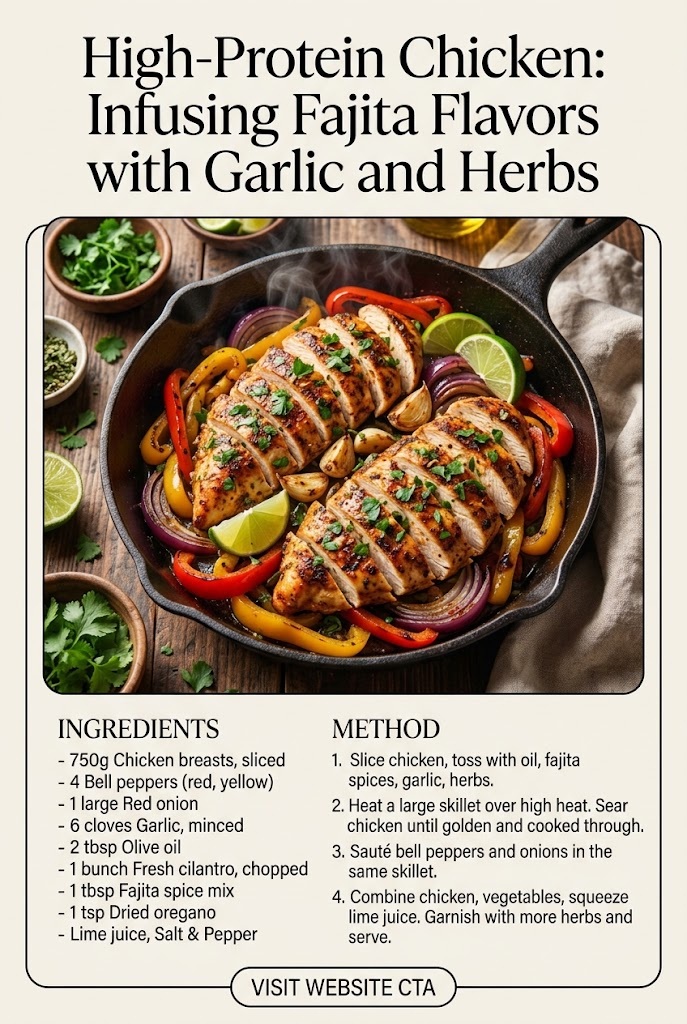
High-Protein Chicken: Infusing Fajita Flavors with Garlic and Herbs
In the world of fitness and nutrition, chicken breast often gets a bad reputation for being bland or repetitive. However, when you marry the smoky, vibrant essence of Mexican fajitas with the aromatic depth of roasted garlic and fresh Mediterranean herbs, you create a high-protein powerhouse that is anything but boring. This culinary fusion not only satisfies the palate but also provides the essential amino acids required for muscle repair and metabolic health.
This comprehensive guide explores several variations of high-protein chicken recipes that lean heavily into the fajita flavor profile while being elevated by garlic and a curated selection of herbs. Whether you are a bodybuilder looking for a lean meal prep option or a home cook wanting a healthy, flavor-packed family dinner, these recipes are designed to deliver maximum nutrition with gourmet taste.
The Nutritional Powerhouse: Why This Combination Works
Before diving into the recipes, it is essential to understand the “why” behind these ingredients. High-protein diets are scientifically proven to increase satiety and boost the thermic effect of food (TEF), meaning your body burns more calories digesting protein than it does fats or carbohydrates.
- Chicken Breast: The gold standard for lean protein. A 6-ounce serving provides roughly 52 grams of protein with minimal fat.
- Garlic: Beyond its pungent flavor, garlic contains allicin, which has anti-inflammatory properties and supports cardiovascular health.
- Herbs (Cilantro, Oregano, Parsley): These are not just garnishes. They are packed with antioxidants and phytonutrients that help combat oxidative stress caused by intense workouts.
- Fajita Spices (Cumin, Paprika, Chili): These spices contain capsaicin and other compounds that can slightly increase metabolic rate and improve digestion.
Recipe 1: The Signature High-Protein Garlic-Herb Fajita Skillet
This is the foundational recipe. It focuses on a high-heat sear to lock in juices while creating a charred crust reminiscent of a traditional Mexican cantina, balanced by the elegance of garlic butter and fresh herbs.
Ingredient Details in Form and Shape
| Ingredient | Quantity | Form / Shape |
|---|---|---|
| Chicken Breast | 1.5 lbs | Sliced into thin 1/2 inch strips |
| Bell Peppers (Red, Green, Yellow) | 3 Large | Sliced into long, thin julienne strips |
| Red Onion | 1 Medium | Sliced into thin wedges/half-moons |
| Fresh Garlic | 6 Cloves | Finely minced into a paste |
| Fresh Cilantro | 1/2 Cup | Finely chopped (stems included for flavor) |
| Fresh Oregano | 1 Tablespoon | Minced leaves (discard stems) |
| Olive Oil | 2 Tablespoons | Liquid (cold-pressed) |
| Smoked Paprika | 1 Tablespoon | Ground powder |
| Ground Cumin | 1 Teaspoon | Ground powder |
| Chili Powder | 1/2 Teaspoon | Fine powder |
| Sea Salt | 1 Teaspoon | Fine grain |
| Black Pepper | 1/2 Teaspoon | Coarsely cracked |
| Lime Juice | 2 Whole Limes | Freshly squeezed liquid |
| Grass-fed Butter (Optional) | 1 Tablespoon | Small chilled cube |
Step-by-Step Preparation Instructions
Step 1: The High-Protein Marinade
Place your sliced chicken strips into a large glass mixing bowl. In a separate small bowl, whisk together the olive oil, half of the minced garlic, the smoked paprika, cumin, chili powder, salt, and pepper. Pour this mixture over the chicken. Use your hands or tongs to ensure every strip is evenly coated. Let the chicken marinate for at least 30 minutes at room temperature, or up to 4 hours in the refrigerator. This allows the spices to penetrate the muscle fibers, ensuring flavor in every bite.
Step 2: Preparing the Aromatics
While the chicken marinate, prepare your vegetables. Ensure the bell peppers and onions are uniform in shape (thin strips) to ensure they cook at the same rate. Mince your herbs and keep them separate from the vegetables, as they will be added at the end to preserve their volatile oils and bright color.
Step 3: The Searing Phase
Heat a large cast-iron skillet over medium-high heat. It is crucial that the pan is smoking hot. Add a splash of oil. Working in batches to avoid crowding the pan, lay the chicken strips down. Allow them to sear undisturbed for 2-3 minutes until a golden-brown crust forms. Flip and cook for another 2 minutes. Once cooked through, remove the chicken from the pan and set it aside on a plate.
Step 4: Sautéing the Fajita Base
In the same skillet (don’t wash it; the browned bits or “fond” are pure flavor), add the peppers and onions. Sauté for 5-6 minutes. You want them to be tender but still retain a slight “snap.” During the last 60 seconds of cooking, add the remaining minced garlic. Stir constantly to prevent the garlic from burning, which would result in a bitter taste.
Step 5: The Garlic-Herb Infusion
Lower the heat to medium. Return the cooked chicken and its juices back into the skillet with the vegetables. Add the fresh oregano and the optional cube of butter. Toss everything together vigorously. The butter will emulsify with the lime juice and garlic to create a light, silky sauce that coats the high-protein chicken.
Step 6: Finishing Touches
Remove from heat. Squeeze the fresh lime juice over the entire skillet. This acidity “wakes up” the heavy protein and earthy spices. Fold in the fresh cilantro. Serve immediately.
Recipe 2: Sheet Pan Roasted Garlic-Herb Fajita Chicken (Meal Prep Edition)
For those who are busy, the sheet pan method offers a “set it and forget it” approach while maintaining the high protein integrity of the dish. Roasting the garlic mellows its bite, turning it sweet and nutty.
Ingredient Details in Form and Shape
| Ingredient | Quantity | Form / Shape |
|---|---|---|
| Chicken Breast | 2 lbs | Cut into 1-inch uniform cubes |
| Zucchini | 2 Medium | Sliced into half-moons |
| Red Bell Pepper | 2 Large | Sliced into 1-inch squares |
| Yellow Onion | 1 Large | Chopped into 1-inch chunks |
| Garlic Bulbs | 2 Whole | Top cut off to expose cloves |
| Dried Mexican Oregano | 1 Tablespoon | Crushed flakes |
| Dried Parsley | 1 Tablespoon | Fine flakes |
| Onion Powder | 1 Teaspoon | Fine powder |
| Garlic Powder | 1 Teaspoon | Fine powder |
| Cayenne Pepper | 1/4 Teaspoon | Fine powder (optional for heat) |
| Avocado Oil | 3 Tablespoons | Liquid (high smoke point) |
| Lemon Juice | 1 Whole Lemon | Freshly squeezed liquid |
Step-by-Step Preparation Instructions
Step 1: Oven Calibration
Preheat your oven to 425°F (220°C). A high temperature is necessary to roast the chicken quickly without drying it out, ensuring the protein remains succulent. Line a large rimmed baking sheet with parchment paper or aluminum foil for easy cleanup.
Step 2: The Cubing Technique
Cutting the chicken into cubes instead of strips for this recipe increases the surface area for the herbs to stick to. Ensure the chicken, zucchini, and peppers are all roughly the same size to promote even roasting.
Step 3: Seasoning the Roast
In a large bowl, toss the chicken cubes, zucchini, peppers, and onions with avocado oil. Add the dried oregano, parsley, onion powder, garlic powder, cayenne, salt, and pepper. Mix thoroughly until the vegetables and meat are glistening with oil and spices.
Step 4: The Roasted Garlic Secret
Take the two whole garlic bulbs (with tops removed). Drizzle a little oil over the exposed cloves and wrap them loosely in foil. Place them in a corner of the baking sheet. Spread the chicken and vegetable mixture in a single layer across the rest of the sheet. Do not overlap, or the ingredients will steam rather than roast.
Step 5: The Roasting Process
Place the tray in the oven and bake for 18–22 minutes. At the halfway mark, use a spatula to toss the ingredients. The chicken should reach an internal temperature of 165°F.
Step 6: The Garlic Mash
Once the tray is out of the oven, carefully open the garlic foil. The cloves should be soft. Squeeze the roasted garlic cloves out of their skins into a small bowl. Mash them with a fork and mix with a teaspoon of lemon juice.
Step 7: Final Toss
Drizzle the mashed roasted garlic paste over the chicken and vegetables and toss one last time on the hot tray. The residual heat will help the roasted garlic coat the protein, adding a deep, savory dimension that complements the fajita spices.
Recipe 3: Slow-Cooker Shredded Garlic-Herb Fajita Chicken
Perfect for tacos, salads, or high-protein bowls, this method results in ultra-tender chicken that absorbs every drop of the garlic and herb broth.
Ingredient Details in Form and Shape
| Ingredient | Quantity | Form / Shape |
|---|---|---|
| Boneless Chicken Thighs | 2 lbs | Whole, trimmed of excess fat |
| Chicken Bone Broth | 1/2 Cup | Liquid (added collagen/protein) |
| Garlic Cloves | 10 Whole | Peeled and smashed |
| Fresh Rosemary | 2 Sprigs | Whole sprigs (remove later) |
| Fresh Thyme | 4 Sprigs | Whole sprigs (remove later) |
| Cumin Seeds | 1 Teaspoon | Whole seeds |
| Smoked Paprika | 1 Tablespoon | Ground powder |
| Sliced Jalapeños | 1/4 Cup | Pickled or fresh rings |
| Fire Roasted Tomatoes | 1 Can (14oz) | Diced with juice |
| Lime Zest | 1 Tablespoon | Finely grated |
Step-by-Step Preparation Instructions
Step 1: Layering the Flavors
In the base of your slow cooker, place the diced tomatoes (including the juice) and the chicken bone broth. The bone broth adds an extra 5-10 grams of protein to the overall dish compared to standard water.
Step 2: Preparing the Protein
Season the whole chicken thighs with smoked paprika and salt. Place them in the slow cooker. We use thighs here because they withstand long cooking times better than breasts, providing a richer texture while still being high in protein.
Step 3: Adding the Aromatics
Scatter the smashed garlic cloves, whole rosemary sprigs, thyme sprigs, and cumin seeds over the chicken. Add the jalapeños for a subtle fajita-style heat that builds over time.
Step 4: The Low and Slow Method
Cover and cook on “Low” for 6-7 hours or “High” for 3-4 hours. The goal is for the chicken to be “fork-tender,” meaning it falls apart with minimal effort.
Step 5: Shredding the Chicken
Once cooked, remove the chicken thighs and place them on a cutting board. Use two forks to shred the meat into long strands. Remove and discard the woody stems of the rosemary and thyme from the slow cooker liquid.
Step 6: The Reduction
If the remaining liquid in the pot is too thin, transfer it to a saucepan and simmer over high heat for 10 minutes until it reduces by half. This concentrates the garlic and herb flavors. Toss the shredded chicken back into the concentrated sauce.
Step 7: Brightening
Stir in the lime zest and a handful of fresh chopped parsley before serving. This creates a “bright” finish to a deeply savory, high-protein meal.
Advanced Flavor Engineering: Mastering the Garlic-Herb-Fajita Balance
To truly excel at these recipes, one must understand the interaction between the three primary flavor components.
1. The Garlic Matrix
Garlic changes its chemical profile based on how it is cut and cooked.
- Minced/Crushed: Releases the most allicin, providing a sharp, spicy bite. Best for quick stir-frys like the Skillet Fajita.
- Smashed: Provides a medium flavor, perfect for slow cooking.
- Whole/Roasted: Becomes sweet and buttery, ideal for balancing the spicy heat of cumin and chili.
For a truly “High Protein Garlic” experience, use a combination of fresh minced garlic in the marinade and roasted garlic in the finishing sauce.
2. The Herb Selection
Not all herbs belong in a fajita-inspired dish. The key is to select herbs that bridge the gap between Mexican and Mediterranean cuisines.
- Cilantro: The classic fajita herb. It provides a citrusy, peppery note.
- Mexican Oregano: Different from Mediterranean oregano, it has citrus undertones that pair perfectly with lime.
- Flat-Leaf Parsley: Adds a “clean” finish and high amounts of Vitamin K.
- Thyme: Its earthy notes ground the smokiness of the paprika.
3. The Protein Texture
In high-protein cooking, texture is king. To prevent the chicken from becoming “rubbery”:
- The Salt Factor: Salt your chicken at least 30 minutes before cooking. This acts as a “dry brine,” breaking down the protein structures so they retain moisture.
- The Acid Balance: Use lime or lemon juice after cooking. If you marinate chicken in acid for too long (over 4 hours), the meat becomes mushy as the acid “cooks” the protein fibers.
Meal Prepping and Storage: Keeping Protein Fresh
One of the biggest challenges with high-protein chicken is reheating it without it becoming dry.
Storage Guidelines
- Refrigeration: Store the garlic-herb fajita chicken in airtight glass containers. Glass is preferable to plastic as it doesn’t retain the strong garlic odor and can be heated more evenly. It will stay fresh for up to 4 days.
- Freezing: This chicken freezes exceptionally well. If freezing, undercook the vegetables slightly so they don’t turn to mush when thawed and reheated.
Reheating for Maximum Satiety
- The Microwave Hack: Place a damp paper towel over the chicken before microwaving. This creates a steam chamber that prevents the protein from drying out.
- The Skillet Refresh: For the best results, reheat in a skillet over medium heat with a tablespoon of water or broth. This restores the “just-cooked” texture.
Complementary High-Protein Sides
To keep the meal balanced and high in protein, pair your chicken with these side dishes:
- Cilantro-Lime Quinoa: Quinoa is a complete protein containing all nine essential amino acids.
- Black Bean and Garlic Mash: Mash black beans with sautéed garlic and a splash of lime juice for a high-fiber, high-protein “refried bean” alternative.
- Greek Yogurt “Sour Cream”: Replace traditional sour cream with plain, non-fat Greek yogurt mixed with a little garlic powder and lime. It tastes almost identical but adds significant protein and probiotics.
- Cauliflower “Fajita” Rice: Grate cauliflower and sauté it with the same fajita spices used on the chicken for a low-carb, high-volume side.
Deep Dive: The Science of Spices in Muscle Recovery
When we talk about “High Protein” recipes, we often ignore the role of spices in recovery. The fajita flavor profile isn’t just about taste; it’s about function.
- Cumin: Research suggests cumin may aid in weight loss and improve insulin sensitivity, which is vital for nutrient partitioning (ensuring protein goes to muscles rather than fat cells).
- Smoked Paprika: High in Vitamin A and E, which are essential for cellular health and recovery after the oxidative stress of a workout.
- Black Pepper: Contains piperine, which has been shown to increase the bioavailability of other nutrients. When you eat garlic and herbs with black pepper, your body absorbs the beneficial compounds more efficiently.
Troubleshooting Common Issues
“My chicken is tough and dry.”
This usually happens due to overcooking. Use a meat thermometer. Chicken breast is done at 165°F (74°C). However, if you remove it at 160°F and let it rest for 5 minutes, “carry-over cooking” will bring it to the perfect, juicy 165°F.
“The garlic flavor is too overwhelming.”
If you find raw garlic too pungent, try blanching the minced garlic in a little bit of oil before adding it to the marinade, or stick to the roasted garlic method in Recipe 2.
“There’s too much liquid in the pan.”
This is common when using frozen chicken or overcrowding the pan. Frozen chicken releases a lot of water. Always thaw completely and pat the chicken dry with paper towels before seasoning. If the pan is crowded, the temperature drops, and the chicken “stews” in its own juice rather than searing.
Customizing the Heat Level
The beauty of the garlic-herb fajita profile is its versatility.
- For the “Heat Seeker”: Add 1 teaspoon of crushed red pepper flakes to the garlic-herb oil. The oil will infuse with the capsaicin, distributing the heat evenly.
- For the “Mild Palate”: Focus on the smoked paprika and omit the chili powder and jalapeños. Increase the amount of fresh parsley to emphasize the “Green” herb flavors over the “Red” spice flavors.
The Role of Healthy Fats in Protein Absorption
While these recipes are “high protein,” they are not “zero fat.” Fat is necessary for the absorption of fat-soluble vitamins (A, D, E, K) found in the bell peppers and herbs.
- Olive Oil: Provides monounsaturated fats that are heart-healthy.
- Avocado Oil: Excellent for high-heat cooking due to its high smoke point, preventing the formation of free radicals.
- Grass-fed Butter: Contains CLA (Conjugated Linoleic Acid), which some studies suggest helps with body composition.
Using a small amount of high-quality fat ensures that your body actually utilizes the nutrients you are consuming.
Conclusion: A Lifestyle, Not Just a Meal
Mastering the high-protein chicken fajita with garlic and herbs is a game-changer for anyone serious about their nutrition. It moves away from the “diet food” mentality and into the realm of culinary enjoyment. By focusing on fresh ingredients, proper searing techniques, and the strategic use of aromatics, you can transform the humble chicken breast into a gourmet experience that supports your fitness goals.
The recipes provided here—the Skillet, the Sheet Pan, and the Slow Cooker versions—offer flexibility for any schedule. By incorporating the ingredient “forms and shapes” correctly, you ensure that every bite has the perfect texture, making your high-protein journey sustainable, delicious, and incredibly rewarding.
Remember, the secret lies in the details: the char on the peppers, the fragrance of the herbs, and the savory punch of the garlic. Combine these with the muscle-building power of chicken, and you have a recipe for success in both the kitchen and the gym.