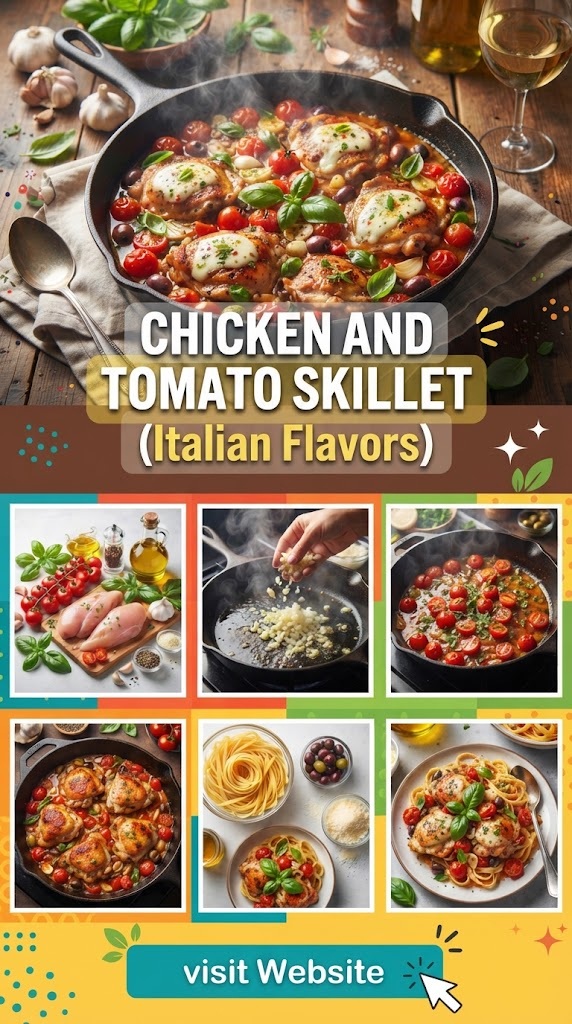
Chicken and Tomato Skillet (Italian Flavors)
Chicken and Tomato Skillet is the kind of dinner that proves a delicious meal does not need to be complicated. Tender, golden-browned chicken breasts are simmered in a rich tomato sauce flavored with garlic, onion, Italian herbs, and Parmesan. Everything cooks in one skillet, making this recipe especially useful for busy weeknights when you want a homemade meal without a mountain of dishes.
The combination of chicken and tomatoes is classic for a reason. The chicken provides a hearty, savory base, while tomatoes bring acidity, sweetness, and plenty of moisture. Garlic, oregano, basil, and Parmesan give the skillet an Italian-inspired character that makes the finished dish taste much more elaborate than the simple ingredient list suggests.
Serve it with crusty bread, pasta, rice, roasted vegetables, or a fresh green salad. You can also add spinach, mushrooms, bell peppers, olives, or mozzarella to make the skillet your own.
Why You’ll Love This Chicken and Tomato Skillet
There are plenty of reasons this recipe deserves a regular place in your dinner rotation.
It is a one-pan meal. Everything comes together in one large skillet, which means less cleanup.
It is quick. The chicken cooks relatively quickly, and the sauce can be prepared in the same pan.
The ingredients are simple. Most of what you need can be found in an ordinary pantry or refrigerator.
It is packed with flavor. Garlic, herbs, tomatoes, Parmesan, and browned chicken create a rich combination without requiring a complicated sauce.
It is versatile. Serve it as-is or pair it with your favorite side dishes.
It works for family dinners. The flavors are familiar and comforting while still feeling special enough for guests.
Complete Recipe at a Glance
Recipe: Chicken and Tomato Skillet
Cuisine: Italian-inspired
Course: Dinner
Prep Time: 15 minutes
Cook Time: 25 minutes
Total Time: 40 minutes
Servings: 4
Difficulty: Easy
Cooking Method: Stovetop skillet
Ingredients
For the Chicken
- 4 boneless, skinless chicken breasts, about 6 ounces each
- 1 teaspoon kosher salt
- ½ teaspoon freshly ground black pepper
- 1 teaspoon Italian seasoning
- ½ teaspoon garlic powder
- 2 tablespoons olive oil
- 1 tablespoon all-purpose flour, optional, for lightly coating the chicken
For the Tomato Sauce
- 1 tablespoon olive oil
- 1 small yellow onion, finely diced
- 4 cloves garlic, minced
- 1 can (14.5 ounces) diced tomatoes, preferably with their juices
- 1 can (8 ounces) tomato sauce
- ½ cup low-sodium chicken broth
- 1 teaspoon Italian seasoning
- ½ teaspoon dried oregano
- ½ teaspoon red pepper flakes, optional
- 1 teaspoon granulated sugar, optional
- ½ teaspoon kosher salt, or to taste
- ¼ teaspoon black pepper
- ½ cup freshly grated Parmesan cheese
- 2 tablespoons chopped fresh basil
- 1 tablespoon chopped fresh parsley
Optional Additions
- 2 cups fresh baby spinach
- 1 cup sliced mushrooms
- ½ cup sliced bell peppers
- ½ cup pitted Kalamata olives
- ½ cup shredded mozzarella
- ¼ cup sun-dried tomatoes
- 1 tablespoon balsamic vinegar
- Extra Parmesan for serving
Ingredient Details
Chicken
Boneless, skinless chicken breasts are convenient and lean. For the most tender results, use pieces that are similar in thickness so they cook evenly.
If your chicken breasts are very thick, slice them horizontally into cutlets or gently pound them to an even thickness. This reduces cooking time and helps prevent the outside from becoming dry before the center is cooked.
You can substitute boneless, skinless chicken thighs if you prefer darker meat. Thighs are naturally more forgiving and remain juicy during simmering.
Tomatoes
Canned diced tomatoes provide texture, while tomato sauce creates a smoother base. Using both gives the skillet sauce a balanced consistency.
For a chunkier dish, increase the amount of diced tomatoes. For a smoother sauce, replace some of the diced tomatoes with additional tomato sauce.
Fresh tomatoes can also be used when they are ripe and flavorful. Simply chop approximately 3 cups of fresh tomatoes and add them to the skillet.
Garlic
Fresh garlic gives the sauce its characteristic Italian-inspired aroma. Four cloves create a noticeable garlic flavor without overwhelming the tomatoes.
If you love garlic, you can increase the amount.
Italian Seasoning
A good Italian seasoning blend usually contains herbs such as oregano, basil, thyme, rosemary, and marjoram. It makes the recipe particularly easy because you don’t have to measure several dried herbs separately.
Parmesan
Freshly grated Parmesan melts into the tomato sauce and gives it a savory, slightly nutty flavor.
For the best texture, grate Parmesan directly from a wedge instead of using very finely powdered shelf-stable Parmesan.
How to Prepare the Chicken
Before cooking, pat the chicken breasts dry with paper towels.
This simple step is important because excess moisture can prevent the chicken from browning properly.
Place the chicken on a cutting board and check the thickness. If the breasts are thick on one end and thin on the other, gently pound them until they are relatively even.
Season both sides with salt, pepper, Italian seasoning, and garlic powder.
If using flour, lightly dust each piece. You don’t want a thick coating. A very thin layer helps create a beautiful golden crust and can also help slightly thicken the sauce later.
How to Cook Chicken and Tomato Skillet
Step 1: Heat the Skillet
Place a large, heavy skillet over medium-high heat.
A cast-iron skillet works especially well, but stainless steel or another large heavy-bottomed skillet is also suitable.
Add 2 tablespoons of olive oil.
Allow the oil to become hot but not smoking.
Step 2: Brown the Chicken
Carefully place the seasoned chicken into the hot skillet.
Do not overcrowd the pan. If necessary, cook the chicken in two batches.
Cook for approximately 4–5 minutes on the first side, without moving it too much.
You are looking for a deep golden-brown crust.
Flip the chicken and cook the second side for another 3–4 minutes.
The chicken does not necessarily need to be completely cooked through at this point because it will finish cooking in the tomato sauce.
Transfer the browned chicken to a clean plate.
Important Tip
Don’t immediately start stirring or flipping the chicken.
Allowing it to remain in contact with the hot skillet gives it time to develop flavorful browning.
Step 3: Cook the Onion
Reduce the heat to medium.
Add the remaining tablespoon of olive oil if the skillet looks dry.
Add the diced onion.
Cook for approximately 3–4 minutes, stirring occasionally, until the onion becomes soft and translucent.
As the onion cooks, use a wooden spoon to scrape up any browned bits stuck to the bottom of the skillet.
Those browned bits contain concentrated flavor.
Step 4: Add the Garlic
Add the minced garlic.
Cook for approximately 30–60 seconds.
Stir constantly during this stage.
Garlic can burn quickly, and burnt garlic will make the sauce bitter.
You want it to become fragrant rather than dark brown.
Step 5: Build the Tomato Sauce
Add the diced tomatoes with their juices.
Pour in the tomato sauce and chicken broth.
Add:
- Italian seasoning
- Dried oregano
- Red pepper flakes, if using
- Salt
- Black pepper
- Sugar, if needed
Stir everything together.
Bring the mixture to a gentle simmer.
Step 6: Simmer the Sauce
Let the tomato mixture simmer uncovered for approximately 5–7 minutes.
This gives the tomatoes time to cook down and allows the flavors to combine.
Taste the sauce.
If the tomatoes are particularly acidic, add a small amount of sugar.
Don’t automatically add sugar. Good-quality tomatoes may already have enough natural sweetness.
If the sauce tastes flat, it may simply need additional salt.
Step 7: Return the Chicken to the Skillet
Place the browned chicken breasts back into the tomato sauce.
Spoon some of the sauce over the chicken.
Reduce the heat to medium-low.
Cover the skillet loosely with a lid and simmer for approximately 8–12 minutes, depending on the thickness of the chicken.
The exact cooking time will vary.
The safest way to determine whether chicken is ready is to use an instant-read thermometer.
The thickest part of the chicken should reach 165°F (74°C).
Step 8: Add Parmesan
Once the chicken is cooked, reduce the heat to low.
Sprinkle the Parmesan cheese into the tomato sauce.
Stir gently around the chicken so the cheese melts into the sauce.
The Parmesan adds body and a creamy, savory quality without requiring heavy cream.
If the sauce becomes too thick, add a splash of chicken broth.
Step 9: Add Fresh Herbs
Turn off the heat.
Sprinkle fresh basil and parsley over the skillet.
Fresh herbs are best added near the end because their delicate flavor and aroma can diminish with prolonged cooking.
If you’re using fresh spinach, stir it into the hot sauce just before turning off the heat. It should wilt within a minute or two.
Step 10: Rest and Serve
Allow the chicken to rest in the skillet for approximately 3–5 minutes.
This gives the juices time to redistribute.
Spoon tomato sauce over each chicken breast.
Finish with additional Parmesan, fresh basil, parsley, and a drizzle of olive oil if desired.
Your Italian-inspired Chicken and Tomato Skillet is ready to serve.
How to Know When the Chicken Is Done
Chicken should never be judged by color alone.
The most reliable method is an instant-read thermometer inserted into the thickest part of the chicken.
The chicken should reach 165°F (74°C).
If the chicken is especially thick, allow additional cooking time.
Avoid cutting the chicken repeatedly to check its progress because doing so allows juices to escape.
Tips for the Best Chicken and Tomato Skillet
1. Don’t Skip the Browning
Browning creates much deeper flavor than simply simmering raw chicken in tomato sauce.
Give the chicken enough time to develop a golden crust before turning it.
2. Use a Large Skillet
A skillet that is too small can cause the chicken to steam instead of brown.
A 12-inch skillet is ideal for four chicken breasts.
3. Don’t Burn the Garlic
Garlic only needs about 30–60 seconds before the tomatoes go into the pan.
If it becomes dark brown, it can develop a bitter flavor.
4. Taste the Sauce
Tomatoes vary significantly in acidity and sweetness.
Taste the sauce before returning the chicken to the skillet and adjust the seasoning.
5. Use Fresh Parmesan
Freshly grated Parmesan melts more naturally into the sauce and provides better flavor.
6. Don’t Overcook the Chicken
Chicken breast can become dry if cooked too long.
Once it reaches 165°F, remove it from prolonged heat.
7. Let the Chicken Rest
A short resting period helps retain moisture.
Delicious Variations
Creamy Chicken and Tomato Skillet
For a richer sauce, stir in ¼–½ cup heavy cream after the chicken is cooked.
Keep the heat low and avoid vigorously boiling the cream.
You can also add Parmesan for an extra creamy finish.
Spinach Chicken Tomato Skillet
Add 2 cups of fresh baby spinach during the final 2 minutes.
Stir until the spinach wilts.
The spinach adds color, texture, and extra vegetables.
Mozzarella Chicken and Tomato Skillet
After the chicken is cooked, sprinkle shredded mozzarella over the top.
Cover the skillet for 2–3 minutes until the cheese melts.
For an attractive browned cheese topping, place an oven-safe skillet under the broiler briefly, watching it carefully.
Mushroom Chicken Tomato Skillet
Slice approximately 1 cup of mushrooms.
Cook them after browning the chicken and before adding the onions.
Allow the mushrooms to release their moisture and develop some browning.
Spicy Chicken Tomato Skillet
Increase the red pepper flakes or add sliced fresh chili peppers.
You can also stir in a small amount of Calabrian chili paste for a more intense Italian-inspired heat.
Olive and Tomato Chicken
Add ½ cup Kalamata olives near the end of cooking.
The olives provide a salty, savory contrast to the sweet tomato sauce.
Sun-Dried Tomato Version
Chop ¼ cup sun-dried tomatoes and add them to the sauce.
They provide concentrated tomato flavor and a slightly sweet, tangy taste.
What to Serve With Chicken and Tomato Skillet
This dish is flexible enough to pair with almost anything.
Pasta
Serve the chicken and tomato sauce over spaghetti, linguine, penne, or fettuccine.
The pasta absorbs the sauce and turns the skillet into a complete Italian-inspired dinner.
Crusty Bread
Warm Italian bread, sourdough, or a baguette is perfect for soaking up the tomato sauce.
Rice
White rice, brown rice, or seasoned rice works well if you want something simple.
Mashed Potatoes
The tomato sauce spooned over creamy mashed potatoes creates a comforting combination.
Roasted Vegetables
Try:
- Broccoli
- Zucchini
- Green beans
- Asparagus
- Brussels sprouts
- Bell peppers
Green Salad
A simple salad with lettuce, cucumber, tomatoes, olive oil, lemon juice, and Parmesan provides a fresh contrast to the warm skillet.
Make-Ahead Instructions
You can prepare the tomato sauce in advance.
Cook the sauce as directed, then cool it and refrigerate it in an airtight container.
When you’re ready to eat, reheat the sauce in a skillet and add freshly browned chicken.
You can also cook the entire dish ahead of time.
However, because chicken breast can dry out during repeated reheating, avoid reheating it for longer than necessary.
Storage
Allow leftovers to cool before transferring them to an airtight container.
Refrigerate for up to 3–4 days.
Store the chicken and sauce together so the meat remains moist.
How to Reheat
Stovetop
Place the chicken and sauce in a skillet.
Add a small splash of chicken broth or water.
Cover and heat over medium-low heat until warmed through.
Microwave
Place one portion in a microwave-safe dish.
Cover loosely.
Heat in short intervals, stirring the sauce between intervals, until hot.
Avoid overheating because it can make the chicken tough.
Can You Freeze Chicken and Tomato Skillet?
Yes.
Allow the dish to cool completely before transferring it to a freezer-safe container.
Freeze for up to approximately 2–3 months for best quality.
Thaw overnight in the refrigerator.
Reheat gently on the stovetop with a splash of chicken broth.
If you plan to freeze the recipe, you may prefer to add fresh Parmesan and herbs after reheating rather than before freezing.
Common Mistakes to Avoid
Crowding the Pan
Putting too much chicken into a small skillet lowers the temperature and prevents proper browning.
Cook in batches if necessary.
Using Cold, Wet Chicken
Excess moisture can interfere with browning.
Pat the chicken dry before seasoning.
Cooking at Excessively High Heat
High heat can burn the garlic and tomatoes while leaving the chicken undercooked.
Use medium-high heat for browning and medium-low heat for simmering.
Overloading the Sauce
Adding too many ingredients can turn a simple skillet into an unbalanced dish.
Start with the basic recipe and add extras thoughtfully.
Forgetting to Taste
Tomatoes, broth, Parmesan, and seasoning blends all contain different amounts of salt.
Always taste and adjust before serving.
Frequently Asked Questions
Can I use chicken thighs?
Absolutely. Boneless, skinless chicken thighs are an excellent substitute for chicken breasts.
They generally remain juicy and flavorful during simmering.
Can I use fresh tomatoes?
Yes.
Use ripe tomatoes and chop them into bite-sized pieces. Keep in mind that fresh tomatoes can contain more water than canned tomatoes, so the sauce may require additional simmering.
Can I use chicken tenders?
Yes.
Chicken tenders cook much faster, so reduce the cooking time and monitor their internal temperature carefully.
Can I use canned crushed tomatoes?
Yes.
Crushed tomatoes will produce a smoother sauce than diced tomatoes.
Can I add cream?
Yes.
Add ¼–½ cup heavy cream after the chicken has cooked and reduce the heat to low.
Can I make it spicy?
Definitely.
Add red pepper flakes, fresh chili, cayenne pepper, or a small amount of chili paste.
What cheese works besides Parmesan?
Mozzarella, Pecorino Romano, Asiago, or provolone can all work well.
Can I make this gluten-free?
Yes.
Simply omit the optional flour coating and make sure your chicken broth and other packaged ingredients are certified gluten-free if necessary.
Can I make it dairy-free?
Yes.
Leave out the Parmesan and use a dairy-free alternative if desired.
Nutrition Information
Approximate nutrition per serving will vary depending on the size of the chicken breasts, amount of Parmesan, oil used, and serving accompaniments.
For the basic recipe, one serving is approximately:
- Calories: 400–450
- Protein: 45–50g
- Carbohydrates: 12–16g
- Fat: 18–22g
- Fiber: 3–4g
- Sodium: Variable
If served with pasta, bread, rice, or cheese, the nutritional values will increase.
Chef’s Notes
For an especially flavorful result, don’t rush the first stage of cooking. The golden-brown crust created on the chicken becomes part of the sauce later.
Another useful trick is to scrape the skillet thoroughly when adding the tomatoes. The browned pieces left behind from the chicken contain concentrated savory flavor. As the broth and tomatoes loosen them from the pan, they become part of the sauce.
If your sauce seems too acidic, don’t immediately add a large amount of sugar. First check the salt level. A properly seasoned tomato sauce often tastes more balanced without much added sweetness.
Fresh basil is another small addition that makes a significant difference. Dried herbs provide the foundation, while fresh basil added at the end provides a bright aroma.
Complete Printable Recipe
Chicken and Tomato Skillet
Servings: 4
Prep: 15 minutes
Cook: 25 minutes
Total: 40 minutes
Ingredients
Chicken:
- 4 boneless, skinless chicken breasts
- 1 teaspoon kosher salt
- ½ teaspoon black pepper
- 1 teaspoon Italian seasoning
- ½ teaspoon garlic powder
- 2 tablespoons olive oil
- 1 tablespoon flour, optional
Sauce:
- 1 tablespoon olive oil
- 1 small yellow onion, diced
- 4 garlic cloves, minced
- 14.5-ounce can diced tomatoes
- 8-ounce can tomato sauce
- ½ cup chicken broth
- 1 teaspoon Italian seasoning
- ½ teaspoon dried oregano
- ½ teaspoon red pepper flakes, optional
- 1 teaspoon sugar, optional
- ½ teaspoon salt
- ¼ teaspoon black pepper
- ½ cup grated Parmesan
- 2 tablespoons fresh basil
- 1 tablespoon fresh parsley
Instructions
- Pat the chicken breasts dry with paper towels.
- If necessary, pound thick chicken breasts to an even thickness.
- Season both sides with salt, pepper, Italian seasoning, and garlic powder.
- Lightly dust with flour if using.
- Heat 2 tablespoons olive oil in a large skillet over medium-high heat.
- Add the chicken and cook for 4–5 minutes on the first side.
- Flip and cook for another 3–4 minutes.
- Transfer the browned chicken to a plate.
- Reduce heat to medium.
- Add the remaining tablespoon of olive oil if necessary.
- Add diced onion and cook for 3–4 minutes.
- Add minced garlic and cook for 30–60 seconds.
- Add diced tomatoes, tomato sauce, and chicken broth.
- Stir in Italian seasoning, oregano, red pepper flakes, salt, pepper, and optional sugar.
- Simmer uncovered for 5–7 minutes.
- Return the chicken to the skillet.
- Spoon sauce over the chicken.
- Cover loosely and simmer over medium-low heat for 8–12 minutes.
- Check the thickest part of the chicken with an instant-read thermometer. It should reach 165°F (74°C).
- Reduce the heat to low and sprinkle Parmesan into the sauce.
- Stir gently and allow the cheese to melt.
- Turn off the heat.
- Add fresh basil and parsley.
- Let the chicken rest for 3–5 minutes.
- Garnish with additional Parmesan and fresh herbs.
- Serve hot with pasta, crusty bread, rice, potatoes, or vegetables.
Final Thoughts
This Chicken and Tomato Skillet brings together everything you want in a weeknight dinner: tender chicken, a rich tomato sauce, aromatic garlic, Italian herbs, and Parmesan—all prepared in a single pan.
The recipe is easy enough for a busy evening but flavorful enough to serve when you’re entertaining. Once you master the basic version, you can customize it with spinach, mushrooms, olives, mozzarella, peppers, or a touch of cream.
For the best result, focus on three things: brown the chicken well, build the tomato sauce patiently, and avoid overcooking the chicken. Those simple steps transform basic ingredients into a satisfying, restaurant-style skillet dinner that your family will want again and again.