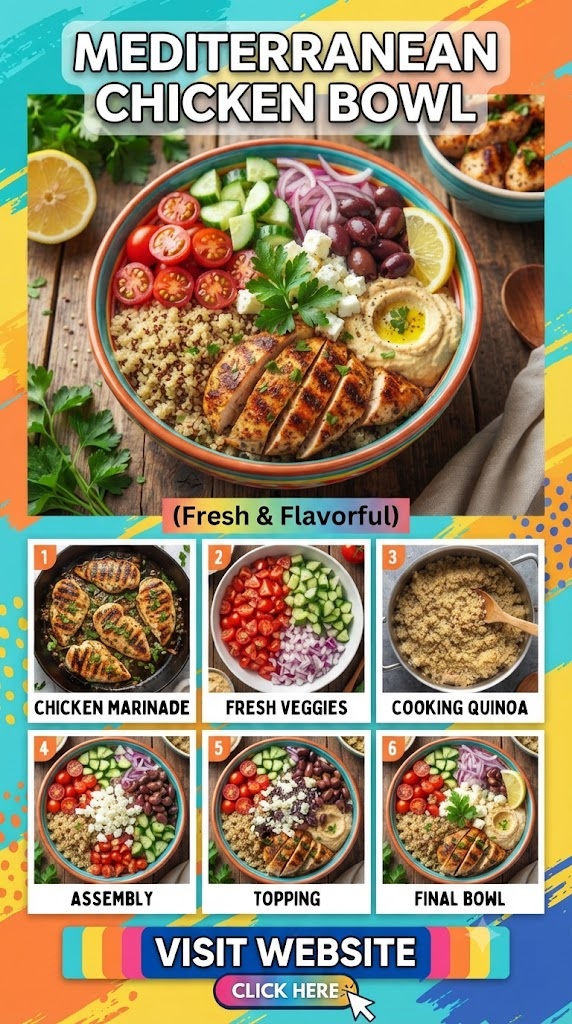
Mediterranean Chicken Bowl (Fresh & Flavorful)
The Ultimate Mediterranean Chicken Bowl: A Fresh, Flavorful & Healthy Meal Prep Favorite
Introduction
But why has it gained such popularity? It checks all the boxes for the modern lifestyle. It is packed with lean protein, heart-healthy fats, and an array of colorful vegetables. It is incredibly versatile, perfect for a quick weeknight dinner or as the star of your meal prep routine. It is also highly customizable, catering to various dietary needs without sacrificing taste. If you are looking to elevate your lunch game with a meal that is as nourishing as it is delicious, the Mediterranean Chicken Bowl is your answer.
What Is a Mediterranean Chicken Bowl?
At its heart, a Mediterranean Chicken Bowl is a deconstructed meal, elegantly layered to showcase its components. Instead of a traditional plate where food is separated, this “bowl” style combines all elements into one harmonious dish. The concept draws from the Mediterranean Diet, which emphasizes whole grains, lean proteins, healthy fats (like olive oil), and an abundance of fresh produce .
The base typically consists of a wholesome grain like quinoa or rice. This is then topped with juicy, grilled chicken, marinated in a zesty herb blend. A fresh salad of cucumber, tomatoes, and red onion adds crunch, while creamy elements like tzatziki or hummus and briny feta cheese bring the dish together. The result is a meal that is a feast for the eyes and the palate, offering a balanced profile of macros and micro-nutrients in every single bite.
Key Ingredients
The beauty of this dish lies in its simplicity. Each ingredient is chosen for a specific purpose, creating a balanced and flavorful experience. Here is a breakdown of what you will need for a standard recipe serving 2-4 people .
For the Chicken Marinade:
- 1.5 lbs Boneless, Skinless Chicken Thighs or Breasts: Thighs are juicier and more flavorful, while breasts are a leaner option. Both work exceptionally well .
- 3 tbsp Olive Oil: The foundation of the marinade and a source of healthy monounsaturated fats. It helps to carry the flavors and keep the chicken moist during cooking .
- Juice and Zest of 1 Lemon: Provides a bright, acidic tang that tenderizes the meat and cuts through the richness of the olive oil and chicken .
- 3 Cloves Garlic, Minced: Adds a pungent, savory depth that is fundamental to Mediterranean cooking .
- 1 tsp Dried Oregano: A classic Mediterranean herb that imparts an earthy, slightly peppery warmth .
- ½ tsp Ground Cumin & ½ tsp Paprika: These spices add a gentle warmth, smokiness, and a beautiful color to the chicken .
- 1 tsp Salt & ½ tsp Black Pepper: Essential seasonings to enhance all the other flavors in the dish .
For the Bowl:
- 2 cups Cooked Grain (Quinoa, Brown Rice, or Couscous): Acts as the wholesome base. Quinoa is a complete protein and gluten-free, while rice and couscous are classic, comforting choices .
- 1 cup Diced Cucumber: Offers a refreshing, crisp crunch that contrasts with the warm chicken and grains .
- 1 cup Cherry Tomatoes, Halved: Provide bursts of juicy, sweet acidity .
- ¼ cup Red Onion, Thinly Sliced: Adds a sharp, pungent kick that balances the other flavors. For a milder taste, soak the slices in cold water for 10 minutes before using .
- ¼ cup Kalamata Olives: These briny, rich olives are essential for an authentic Mediterranean flavor profile .
- ½ cup Hummus or Tzatziki Sauce: Adds creaminess and a savory element. Hummus offers a nutty, protein-rich option, while tzatziki (a yogurt-cucumber sauce) provides a cool, tangy freshness .
- ¼ cup Crumbled Feta Cheese: Salty and tangy, feta adds a final layer of richness and flavor that ties all the components together .
- 2 tbsp Chopped Fresh Parsley or Mint: Used as a garnish to add a final pop of color and herbaceous brightness .
- Lemon Wedges: For squeezing over the top before serving to add a final zing .
How to Make Mediterranean Chicken Bowl
This recipe is straightforward and rewarding. Here is a step-by-step guide to building your perfect bowl .
Preparation Time: 15 minutes
Cook Time: 15-20 minutes
Marinating Time: At least 30 minutes (or up to overnight)
Step 1: Marinate the Chicken
In a large bowl or a zip-top bag, whisk together the olive oil, lemon juice, lemon zest, minced garlic, oregano, cumin, paprika, salt, and pepper. Add the chicken and turn to coat thoroughly. Marinate in the refrigerator for at least 30 minutes, or up to 8 hours for the best flavor .
Step 2: Cook the Chicken
Heat a grill pan, outdoor grill, or a large skillet over medium-high heat. Cook the chicken for 5-7 minutes per side, depending on the thickness, until it is golden brown and the internal temperature reaches 165°F. Once cooked, transfer the chicken to a cutting board and let it rest for at least 5 minutes before slicing. Resting the chicken is crucial as it allows the juices to redistribute, ensuring a tender and moist bite .
Step 3: Prepare the Grains
While the chicken rests, prepare your chosen grain (rice, quinoa, or couscous) according to the package instructions. For extra flavor, cook the grains in low-sodium chicken broth instead of water and add a pinch of salt .
Step 4: Prep the Vegetables
Dice the cucumber, halve the cherry tomatoes, and thinly slice the red onion. If you want to reduce the sharpness of the onion, soak the slices in cold water for 10 minutes and then drain . Pit and halve the Kalamata olives.
Step 5: Assemble Your Bowl
Begin by placing a generous serving of your cooked grain at the bottom of a bowl. Top with the sliced chicken. Arrange the cucumber, tomatoes, red onion, and olives around the chicken. Add a dollop of hummus and/or tzatziki sauce. Sprinkle generously with crumbled feta cheese and fresh parsley or mint. Serve immediately with a lemon wedge on the side .
Storage Instructions:
For meal prep, store each component of the bowl separately in airtight containers in the refrigerator. The chicken and grains will last for 3-4 days, while the fresh vegetables are best consumed within 2 days. When you are ready to eat, simply assemble the bowl and enjoy. This method ensures that the grains and chicken don’t become soggy .
How to Use Mediterranean Chicken Bowl
The Mediterranean Chicken Bowl is designed for versatility. It is perfect as a satisfying lunch or a quick, healthy dinner. For those who meal prep, it is an ideal candidate. You can easily prepare the components on a Sunday and assemble them during the week for a no-fuss, nutritious meal .
To use the prepped components, simply reheat the chicken and grains in the microwave or on the stovetop until warmed through, then top with the cold vegetables, sauces, and feta. You can also enjoy it cold as a hearty salad-like meal. The key is to keep the sauces and fresh vegetables separate until serving to maintain their texture and freshness .
Potential Benefits of the Mediterranean Chicken Bowl
This dish is not just delicious; it is a powerhouse of nutrition. Let’s explore the potential benefits of incorporating this meal into your diet.
Supports Heart Health
The Mediterranean diet is globally renowned for its heart-healthy properties. This bowl is rich in monounsaturated fats from olive oil, which can help support healthy cholesterol levels. Additionally, ingredients like garlic and the fiber-rich vegetables and grains contribute to overall cardiovascular well-being .
Promotes Healthy Digestion
The combination of fresh vegetables like cucumber and tomatoes, along with whole grains such as quinoa or brown rice, provides a high dose of dietary fiber. Fiber is crucial for maintaining a healthy digestive system, promoting regularity, and feeding the beneficial bacteria in your gut .
Aids in Sustained Energy
This bowl is perfectly balanced with lean protein from the chicken, complex carbohydrates from the grains, and healthy fats. This combination helps to stabilize blood sugar levels, preventing energy crashes and keeping you feeling full and satisfied for longer periods. This can be a great benefit for weight management and maintaining focus throughout the day .
Packed with Essential Nutrients
The Mediterranean Chicken Bowl is a nutrient-dense meal. It is an excellent source of high-quality protein, which is essential for muscle building and repair. The vegetables and herbs provide a wide array of vitamins and antioxidants, including Vitamin C from the lemon and tomatoes, and Vitamin K from the parsley. The feta cheese and olives also contribute valuable minerals like calcium and iron .
Why These Ingredients May Work
The benefits of this dish are rooted in the science of its individual components. The fresh vegetables and herbs are rich in antioxidants, which help combat oxidative stress in the body. The olive oil provides anti-inflammatory properties and helps the body absorb fat-soluble vitamins from the other ingredients .
The lean protein in chicken is vital for satiety and maintaining a healthy metabolism. Meanwhile, the complex carbohydrates in quinoa and rice provide a steady release of energy. The probiotics found in Greek yogurt (used in tzatziki) can also support gut health. While not a cure-all, the synergy of these nutrients makes this meal a fantastic choice for supporting overall wellness.
Who May Benefit From This Remedy
This meal is a great option for a wide variety of adults. It is particularly well-suited for:
- Busy professionals and parents: It is quick to assemble, perfect for meal prepping, and can be a life-saver on hectic days .
- Fitness enthusiasts: The high protein content makes it an excellent post-workout meal to aid in muscle recovery and repair .
- Anyone looking to improve their diet: For those transitioning away from processed foods, this bowl is a flavorful way to incorporate more whole foods into their routine.
- Individuals with dietary restrictions: It is easy to adapt to be gluten-free or dairy-free with simple swaps .
Possible Side Effects and Safety Precautions
While the Mediterranean Chicken Bowl is generally safe for consumption, there are a few considerations to keep in mind.
- Food Allergies: This dish contains common allergens like gluten (if using couscous) and dairy (feta and tzatziki). Always ensure ingredients are safe for your dietary needs .
- Food Safety: Chicken must be cooked to an internal temperature of 165°F to prevent foodborne illnesses. It is also crucial to store leftovers properly in the refrigerator and consume them within a few days .
- Sodium Content: Feta cheese and Kalamata olives are high in sodium. If you are on a low-sodium diet, you may want to reduce the amount used or opt for low-sodium alternatives.
Who Should Avoid It
- Individuals with Dairy Allergies or Lactose Intolerance: They should avoid the feta and tzatziki or use dairy-free alternatives like plant-based feta and hummus .
- People with Histamine Intolerance: Kalamata olives and aged cheese like feta are high in histamines and may trigger symptoms in sensitive individuals.
- Those with Specific Dietary Restrictions: Anyone following a very specific medical diet should consult their doctor or a registered dietitian before making this a staple meal.
How Long Does It Take to See Results?
As a nutritious meal, incorporating the Mediterranean Chicken Bowl into a balanced diet can contribute to a general sense of well-being and sustained energy fairly quickly. However, it is important to understand that it is not a “quick fix.”
The benefits of a healthy diet are cumulative. You may notice improvements in your digestion and energy levels within a few days of eating more whole foods. Long-term benefits, such as improved heart health markers, are the result of a consistent, healthy lifestyle over months and years, not a single meal. The Mediterranean Chicken Bowl is a delicious and sustainable tool to help you maintain that healthy lifestyle .
Tips for Best Results
- Pound the Chicken: For even cooking, pound the chicken breasts to a uniform thickness before marinating .
- Don’t Skimp on Marinating: Allow the chicken to marinate for at least 30 minutes. For the most flavorful and tender chicken, let it marinate in the refrigerator for 2-8 hours .
- Let the Chicken Rest: After cooking, let the chicken rest for 5 minutes before slicing. This simple step ensures the juices stay locked in, making the meat succulent rather than dry .
- Use a Thermometer: An instant-read thermometer is the most reliable way to ensure your chicken is safely cooked (165°F) without overcooking .
- Master Your Sauces: Whether you use store-bought or homemade, the sauce is essential. Tzatziki provides a cooling contrast to the warm spices, while hummus adds a creamy, savory depth .
Common Mistakes to Avoid
- Overcooking the Chicken: This is a common pitfall that results in dry, tough meat. Use a thermometer and pull the chicken off the heat the moment it reaches 165°F .
- Skipping the Resting Time: Cutting into the chicken immediately after cooking will cause all its juices to run out, leaving you with a dry meal.
- Assembling Meal Prep Bowls Too Early: If you are meal prepping, do not assemble the entire bowl with the fresh vegetables and sauces days in advance. Store components separately to prevent sogginess .
- Forgetting Seasoning: Don’t forget to season your grains with a little salt and olive oil. Plain rice or quinoa can be bland and will drag down the overall flavor of the bowl .
Frequently Asked Questions (FAQs)
1. Can I use chicken thighs instead of breasts?
Absolutely! Chicken thighs are a fantastic choice. They are more forgiving to cook and remain juicier than breasts due to their higher fat content. They add incredible flavor to the Mediterranean Chicken Bowl .
2. What is the best grain to use for this bowl?
The “best” grain is a matter of preference. Quinoa is a popular choice because it is a complete protein and gluten-free . Brown rice is a great whole-grain option, while couscous provides a lighter, fluffier texture. All work beautifully .
3. How long does this bowl last in the fridge?
When stored correctly in airtight containers, the cooked chicken and grains will last for 3-4 days. Fresh vegetables should be consumed within 1-2 days for the best texture. It is best to store the components separately .
4. Is this recipe gluten-free?
It can easily be! To make the Mediterranean Chicken Bowl gluten-free, simply use quinoa or rice instead of couscous and double-check that your hummus or tzatziki is gluten-free certified. The rest of the ingredients are naturally gluten-free .
5. Can I make this bowl vegetarian?
Definitely. To make a vegetarian version, simply swap the chicken for roasted chickpeas, grilled halloumi cheese, or falafel. The rest of the bowl remains deliciously the same .
6. What can I use instead of tzatziki sauce?
If you don’t have or like tzatziki, hummus is a fantastic and classic alternative. You can also use a simple lemon-oregano vinaigrette or a tahini-based sauce for a different flavor profile .
Final Thoughts
The Mediterranean Chicken Bowl is much more than a passing food trend. It is a testament to the power of simple, fresh ingredients coming together to create a meal that is both deeply satisfying and incredibly good for you. It embodies the principles of the Mediterranean diet, celebrated for its health benefits and vibrant flavors. Its adaptability makes it a perfect candidate for busy weeknights, weekend meal prep, or even a healthy and impressive dish for guests.
By preparing this bowl, you are not just making a recipe; you are building a meal that nourishes your body and delights your senses. Whether you stick to the classic ingredients or experiment with your own variations, this dish is sure to become a treasured and frequent addition to your culinary rotation.